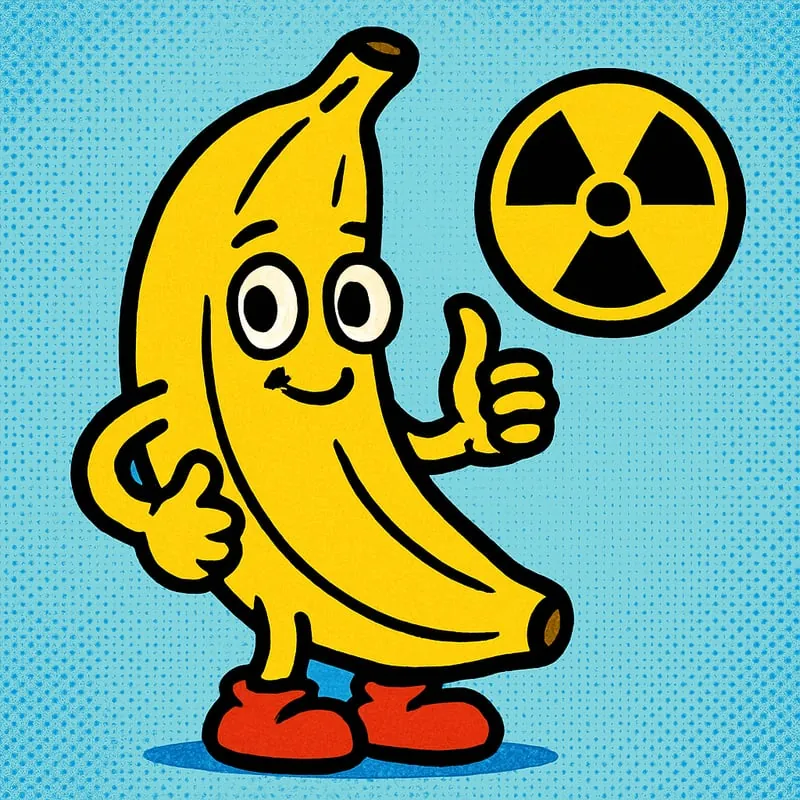
Bananas are packed with potassium, which is one of the reasons they’re good for you. But here’s the part most people don’t know: a small fraction of all potassium - about 0.012% - is a radioactive isotope called potassium-40. That means every banana is slightly, harmlessly radioactive.
The dose from one banana is tiny - about 0.1 microsieverts, less than what you absorb from sunlight in five minutes. Scientists actually invented a unit called the “banana equivalent dose” as a helpful way to compare radiation levels to something familiar. Living near a nuclear plant for a year? Maybe 1 banana. A dental X-ray? About 50 bananas. A coast-to-coast flight? About 400 bananas.
Bananas in big enough shipments have actually been known to set off radiation detectors at ports and customs. The detectors are specifically designed to look for potassium-40, which would otherwise indicate certain types of nuclear material - but it usually just means another container of fruit.