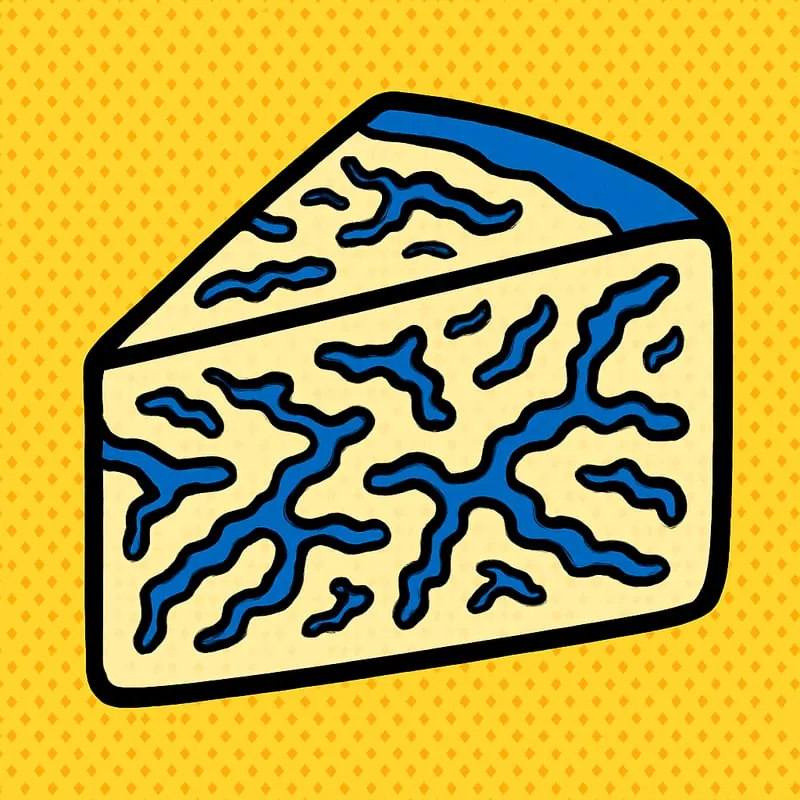
That blue or greenish marbling in a slice of Roquefort, Stilton or Gorgonzola? Yep - fungus. It’s the same genus, Penicillium, that gave us the antibiotic penicillin, just a different species called Penicillium roqueforti. Cheesemakers add it on purpose because they want those funky veins.
To grow the blue patterns, the cheese is pierced all over with thin needles so air can get inside. The mould loves oxygen and spreads through the tunnels, leaving the iconic veins of blue. The mould also breaks down fats and proteins into the strong, tangy flavour compounds that give blue cheese its punch.
Legend says it was discovered by accident over a thousand years ago in southern France. A shepherd supposedly left his lunch of bread and sheep’s cheese in a cool cave, came back weeks later, and found it had turned into something delicious. The town of Roquefort-sur-Soulzon still makes Roquefort cheese in the same caves today.