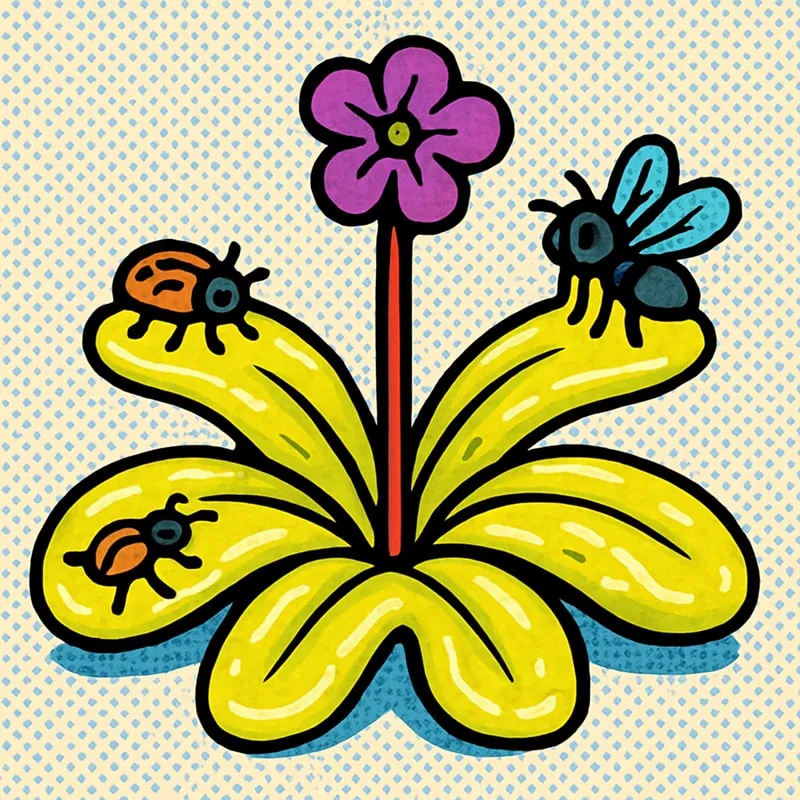
Butterworts (genus Pinguicula) look pretty harmless: a flat rosette of yellowy-green leaves with small purple flowers on tall stems. Touch a leaf and you’ll instantly understand the name. The surface is coated in clear slimy goo that feels exactly like soft butter.
That slime is a sticky digestive juice. When a fungus gnat or other tiny insect lands on the leaf, it gets glued in place. The leaf can slowly curl its edges inward to surround the prey, smothering and digesting it over a few days. The leftover dry husk just blows off in the wind.
In parts of Scandinavia, people once used butterwort leaves to ferment milk. The plant’s juices have antibacterial properties and contain enzymes that thicken milk - drop a leaf in fresh milk and you can make a sort of yoghurt called “tätmjölk” or filmjölk.