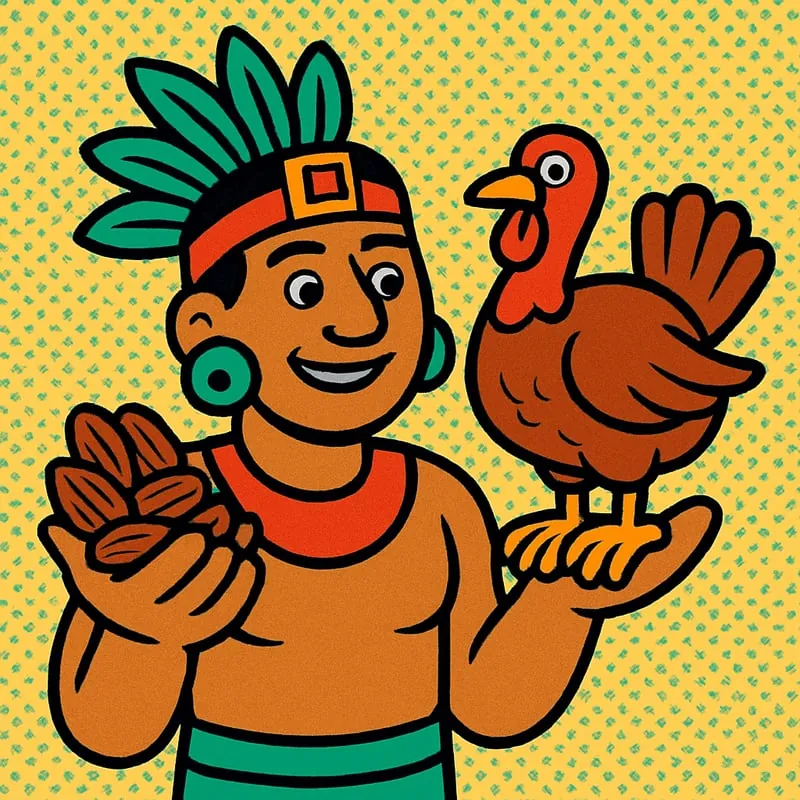
Long before chocolate bars existed, the Aztecs of central Mexico treated cacao beans as money. A turkey cost about 100 beans. A fresh avocado cost three. People paid taxes in beans, and bankers stored them in giant warehouses. Some clever thieves even made fake “beans” out of clay and painted them brown.
The Aztecs didn’t eat chocolate the way we do. They roasted and ground the beans into a paste, mixed it with water, chili, and spices, and drank it cold and frothy. It tasted bitter and earthy, nothing like a candy bar. Only nobles and warriors were allowed to drink it.
When Spanish explorers reached Mexico in the 1500s, they brought cacao beans back home. Europeans added sugar and milk, and over the next 300 years chocolate slowly turned into the sweet solid bars we know today. The word “chocolate” itself comes from the Aztec word “xocolatl,” which means “bitter water.”