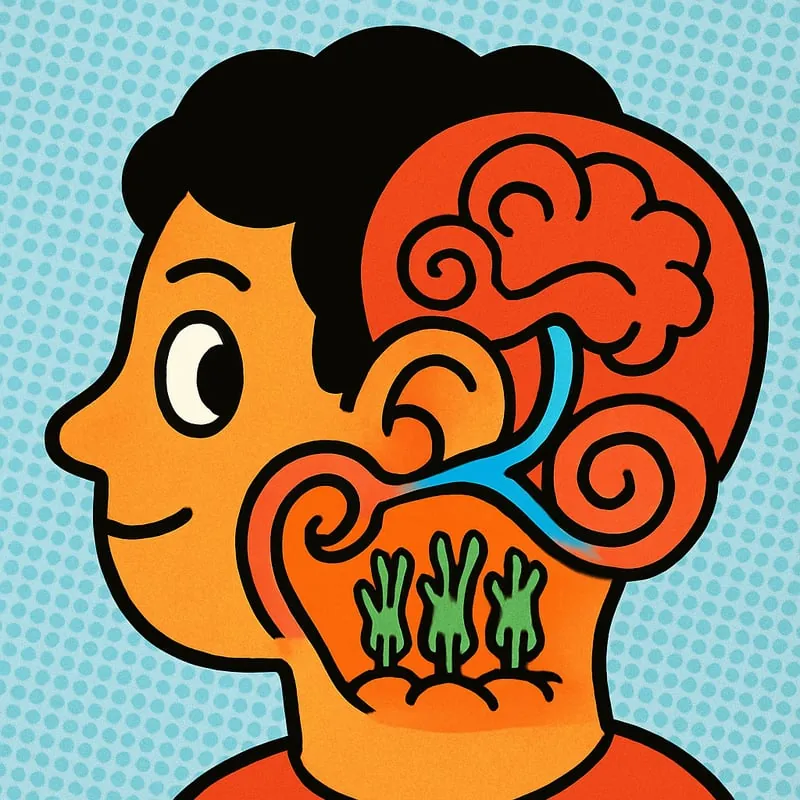
Hearing works through a chain reaction. Sound waves enter your ear canal, vibrate your eardrum, and pass through three tiny bones (the smallest bones in your body) before reaching the inner ear - a spiral-shaped fluid-filled tube called the cochlea.
Inside the cochlea sit about 16,000 microscopic hair cells, each tipped with a tiny bundle of stiff “hairs” called stereocilia. When sound vibrates the fluid around them, the hairs bend, which opens tiny channels and sends an electrical signal to your auditory nerve. Different hair cells are tuned to different frequencies - some pick up low rumbles, others high whistles - so the brain receives a kind of frequency map of every sound.
The catch is that hair cells, unlike most cells, don’t regrow when they die. Loud sounds physically damage them, and the damage builds up over a lifetime. Every loud concert, every nail gun, every cranked-up headphone session permanently kills a few hair cells. This is why hearing loss is usually a one-way street.