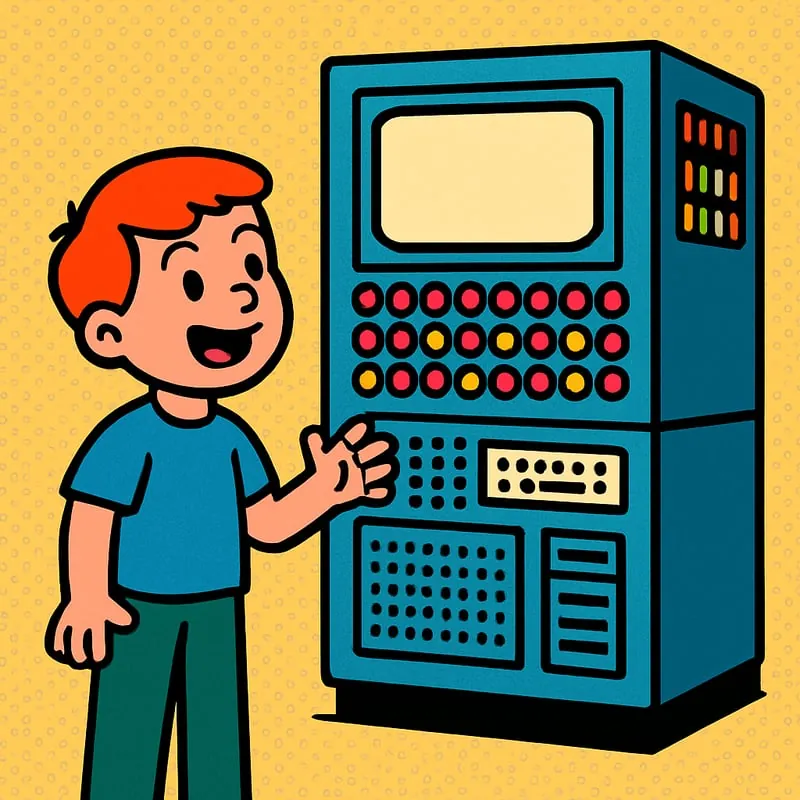
In 1945, engineers at the University of Pennsylvania finished building ENIAC - the Electronic Numerical Integrator and Computer. It filled a room about 50 feet long, weighed 30 tons and used over 17,000 glass vacuum tubes that lit up like tiny light bulbs. It was built to calculate artillery firing tables for the U.S. Army.
ENIAC was incredibly fast for its time. It could do 5,000 additions per second - work that used to take humans days with pencil and paper. But it was hard to “program.” Six women mathematicians had to physically rewire it by plugging and unplugging hundreds of cables every time it needed to do a different calculation.
By today’s standards, ENIAC was painfully weak. A modern smartphone is millions of times more powerful and fits in your pocket. But ENIAC proved that an electronic machine could solve almost any kind of math problem. Every computer, phone, console and smart device since then is a descendant of that 30-ton beast.