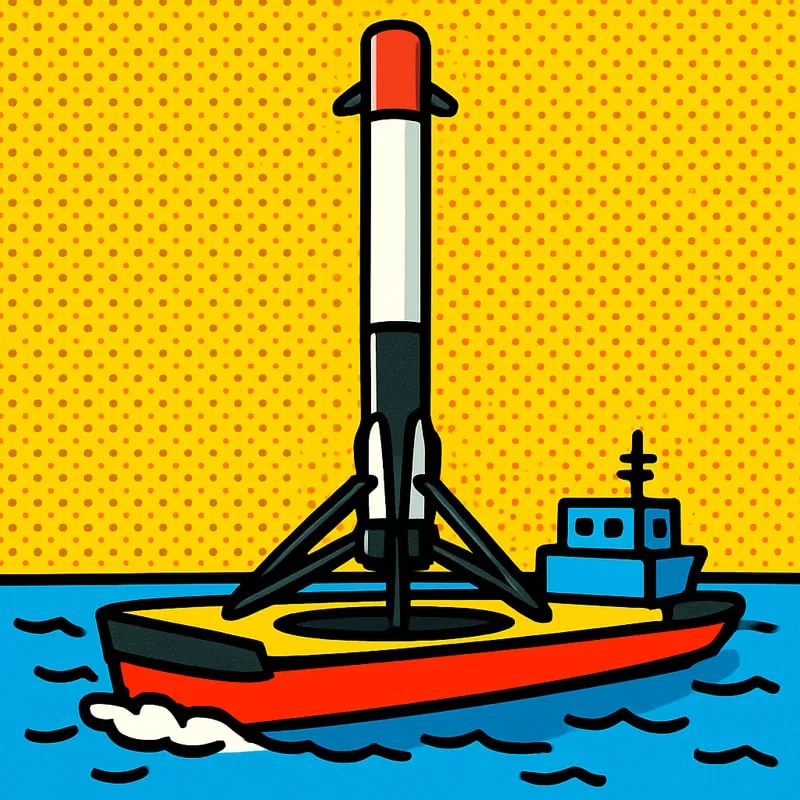
For decades, rockets were treated like fireworks. You launched them, dropped the empty stages in the ocean, and built brand-new rockets for the next flight. Every trip to space cost hundreds of millions of dollars partly because of all that waste. Many engineers thought reusing rockets was simply too hard.
Then in 2015, SpaceX’s Falcon 9 first stage flew to space, separated, flipped around, fired its engines to slow down, and landed gently upright on a launch pad in Florida. Today, Falcon 9 boosters routinely land on floating “droneships” in the middle of the ocean. The autonomous ship pitches in the waves while a 23-story rocket touches down on a target the size of a small parking lot.
Reusing rockets has dropped the cost of reaching orbit by something like 90%. Some Falcon 9 boosters have now flown more than 20 missions each. The same approach is letting SpaceX deploy thousands of internet satellites and could one day make trips to Mars affordable. Other companies are now racing to build their own reusable rockets too.