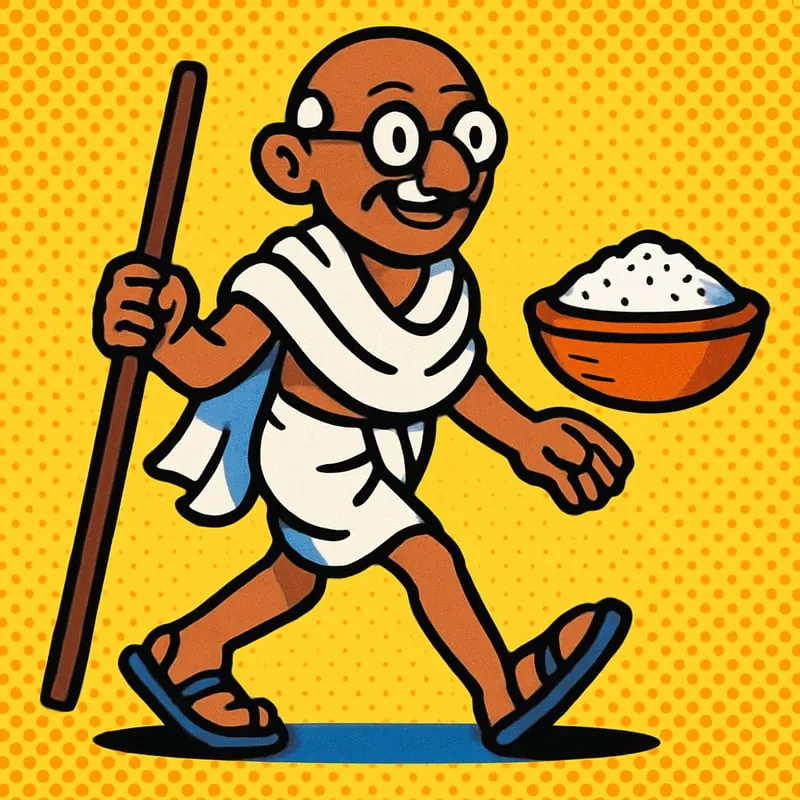
Mohandas Gandhi grew up in India when it was a British colony. He trained as a lawyer in London, then worked in South Africa, where he was thrown off a train for sitting in a “whites-only” carriage. That moment changed his life. He decided he would fight injustice - but always without violence.
Back in India, Gandhi led the campaign for independence using what he called satyagraha, or “truth-force”: peaceful protest, boycotts, marches, and hunger strikes. In 1930 he set off on his most famous protest, a 240-mile walk to the sea. There he scooped up salt from the shore - breaking the British law that said only the government could make or sell salt.
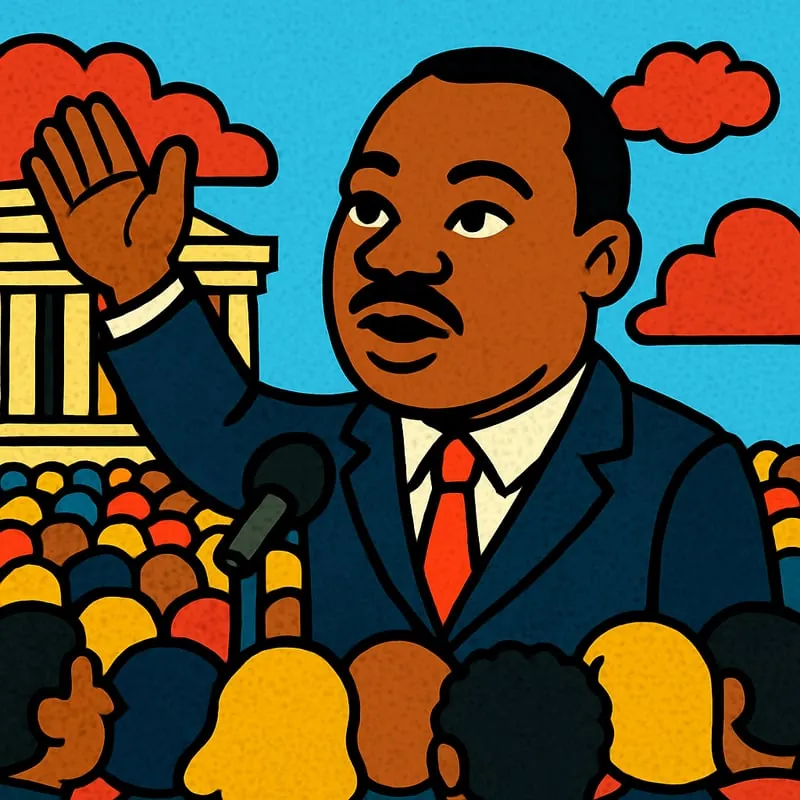
Tens of thousands of Indians joined him. Newspapers around the world covered it. Years of nonviolent struggle eventually pushed Britain to leave, and India became independent in 1947. Gandhi was assassinated less than a year later, but his ideas inspired leaders like Martin Luther King Jr. and Nelson Mandela.