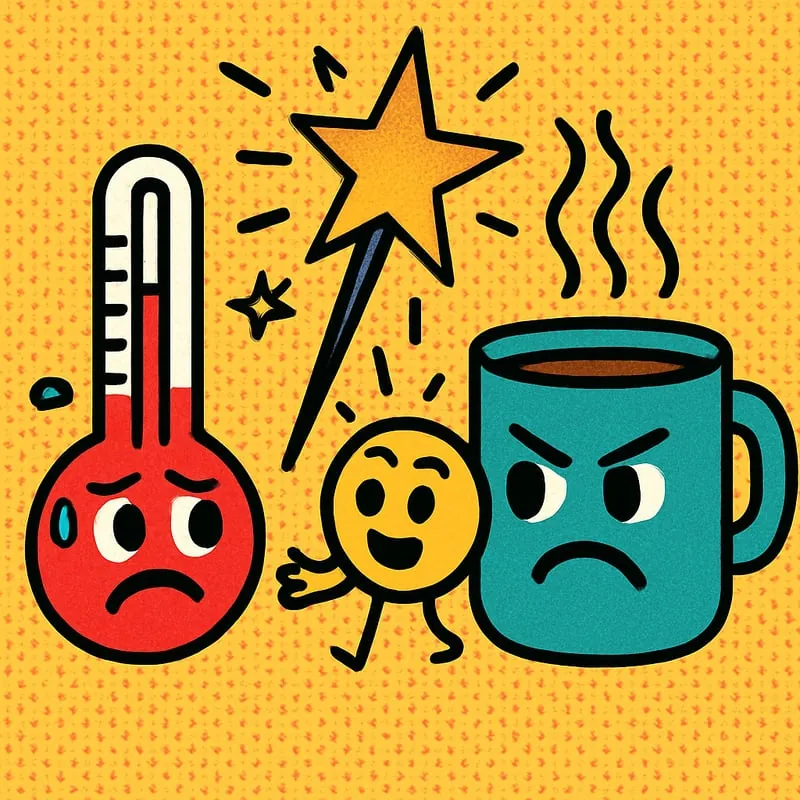
In everyday speech, “hot” usually means both “high temperature” and “lots of heat.” Physicists treat these as different things. Temperature measures how fast the molecules in something are moving. Heat is the total amount of energy stored in it. They’re related, but very different.
Imagine a single tiny spark from a sparkler - temperature about 1,800°F. The spark is extremely hot in temperature terms: its few atoms are moving wildly fast. But there are so few of them that the total energy is almost nothing. The spark hits your skin and the heat dissipates before it can do damage. You hardly feel it.
Now imagine a full mug of coffee at 180°F. The temperature is lower, but the amount of stuff at that temperature is enormous compared to the spark - billions of times more molecules. When that coffee touches your hand, there’s plenty of energy to transfer, and it burns. Same lesson with a swimming pool at 80°F: lower temperature than your body, but enough total heat to keep you warm for hours. Heat is about quantity. Temperature is about how fast.