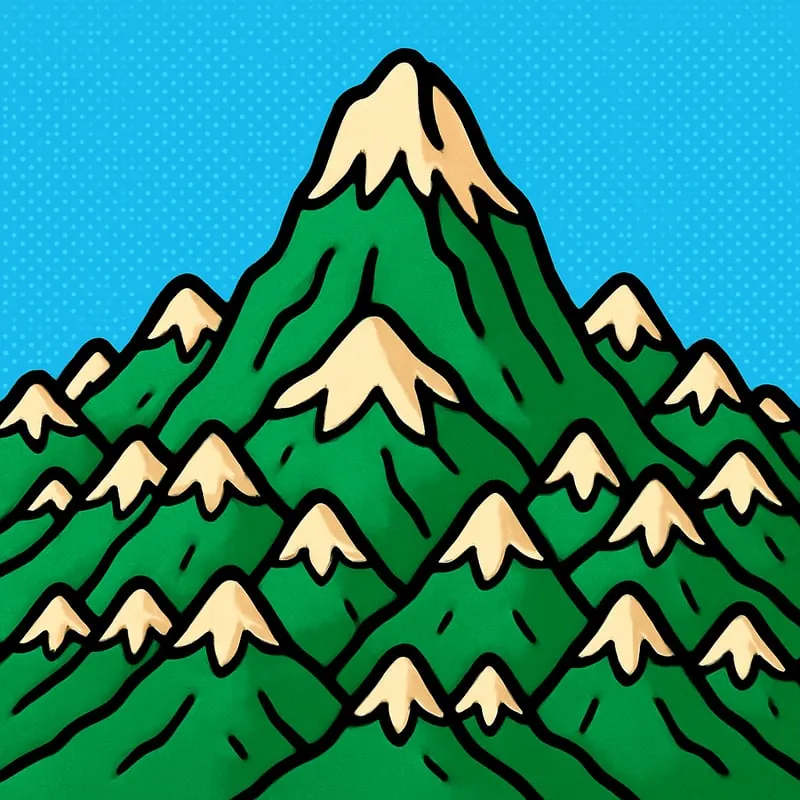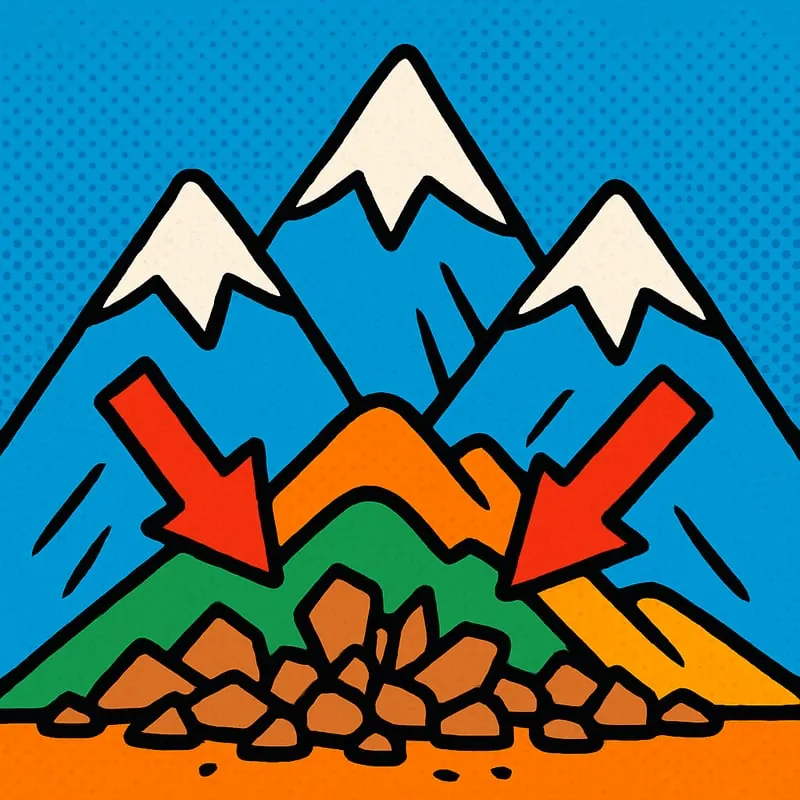
The Himalayas formed when the continent of India smashed into Asia about 50 million years ago. India hasn’t stopped pushing since. It’s still grinding northward at roughly five centimetres a year - about the speed your fingernails grow.
All that squeezing forces the rocks upward, like crumpling a rug. The result is the world’s biggest mountain range: 2,400 kilometres long and home to all 14 of Earth’s mountains over 8,000 metres tall, including Everest, K2, and Kangchenjunga.
The slow-motion crash also explains one of the strangest sights on Everest: fossilised sea creatures embedded in rocks near the top. The Himalayas are built from old seabed, lifted skyward by tectonic plates and frozen mid-collision.