Long before airplanes, two French brothers named Joseph and Étienne Montgolfier figured out that hot air rises and could lift a giant cloth bag into the sky. By 1783, they had built balloons that could fly without anyone aboard. King Louis XVI of France was curious but worried the upper air might be poisonous to humans.
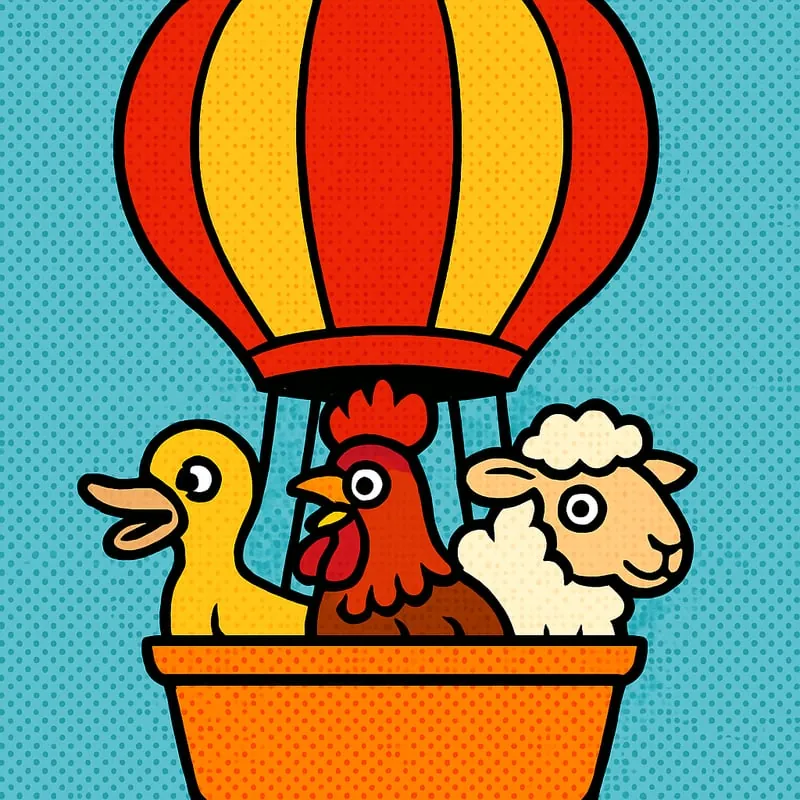
So in September 1783, the Montgolfiers loaded a wicker basket under their balloon with three unlikely test pilots: a duck, a sheep, and a rooster. The duck was a control - ducks already fly fine. The sheep was a stand-in for humans. The rooster was used because chickens don’t fly high. A crowd of about 130,000 people watched the launch in Paris.
The balloon rose, drifted for about 8 minutes, and landed safely in a forest a few miles away. All three animals survived. With that proof that high air was breathable, two human passengers climbed in for the next test flight two months later, becoming the first people ever to fly.