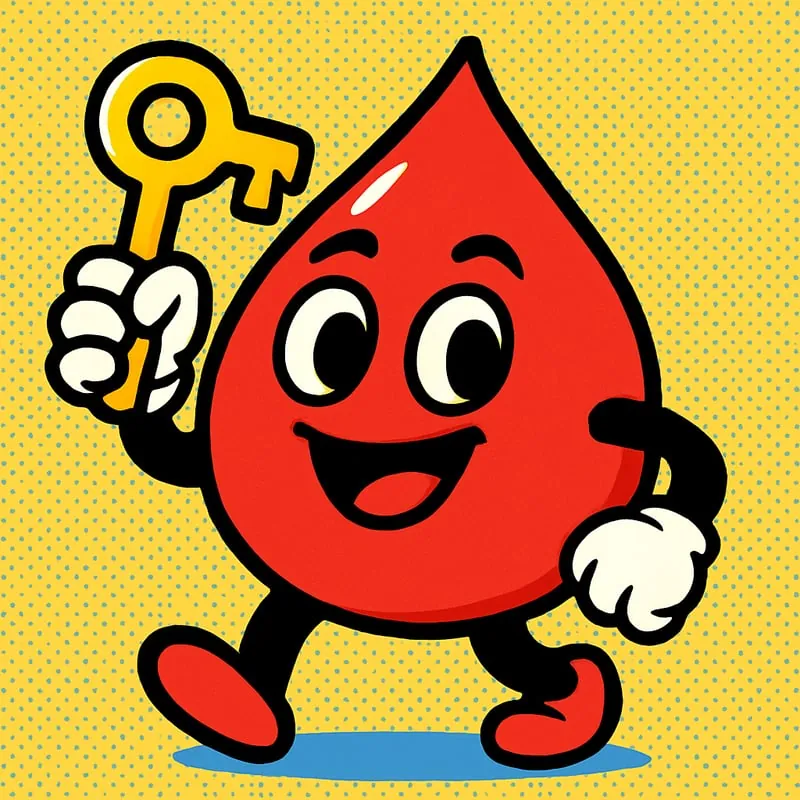
If you somehow extracted all the iron from a person’s body, you’d get about 3-4 grams of it. That’s about the weight of a few paperclips, or roughly enough to forge a very small key. Most of that iron is in your blood - specifically, in the protein hemoglobin that fills your red blood cells.
Hemoglobin’s job is to grab oxygen in your lungs and release it where your body needs it. The iron atom at the heart of each hemoglobin molecule is what makes that binding work - and what gives blood its red color. When iron in hemoglobin grabs oxygen, it reflects bright red light. When the oxygen is released in cells, the blood gets a darker, more purple-red tone. (Veins look bluish through your skin because of the way light scatters through skin - the blood inside is actually dark red, not blue.)
Iron is one of the most common elements in the universe - formed in the cores of stars before they explode. It’s the same element used to make steel, bridges, ships, and skyscrapers. The Eiffel Tower is mostly iron. So are nails, magnets, and the inside of your blood cells. Everywhere you look, iron is doing critical work.