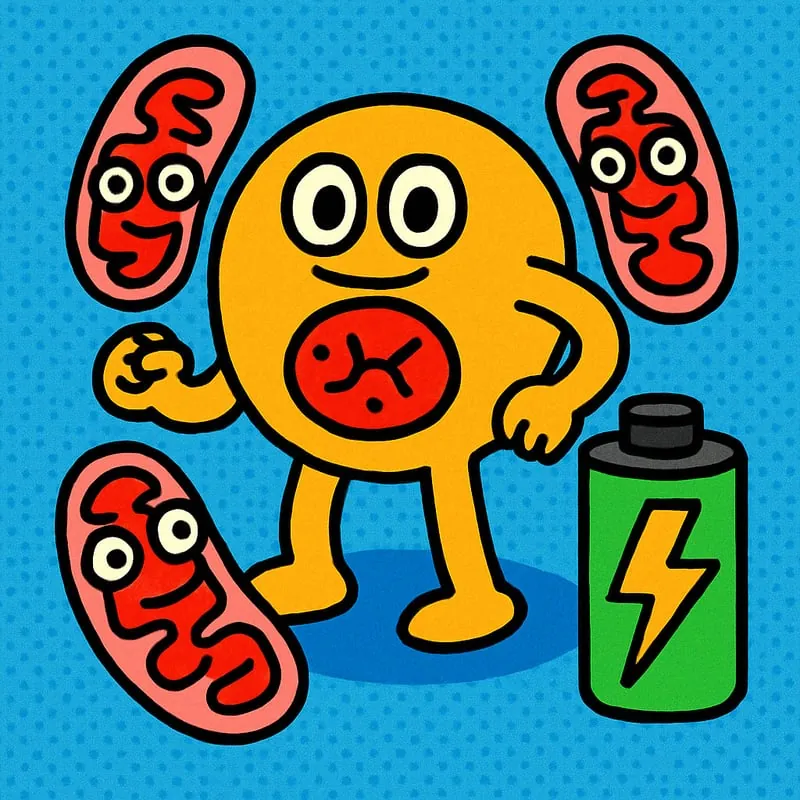
Open up almost any cell in your body and you’ll find dozens, hundreds, or even thousands of bean-shaped structures called mitochondria (mite-oh-KON-dree-uh). They’re the power plants. Their job is to take in food molecules and oxygen and produce ATP - the energy currency that powers everything else in the cell.
The weirdest thing about mitochondria is that they have their own DNA. Not the DNA in the cell’s nucleus - separate, smaller DNA, kept inside the mitochondria themselves. Scientists think that’s because mitochondria weren’t originally part of our cells at all. Billions of years ago, they were independent bacteria that got swallowed by larger cells and ended up making a permanent home there. The two have been working together ever since.
Because of this history, mitochondrial DNA is inherited only from your mother. (Sperm have very few mitochondria, and the ones they carry get destroyed after fertilization.) That means scientists can trace maternal lineages thousands of years back by tracking mitochondrial DNA - and we’ve found that all living humans share a common female ancestor who lived in Africa around 150,000 years ago.