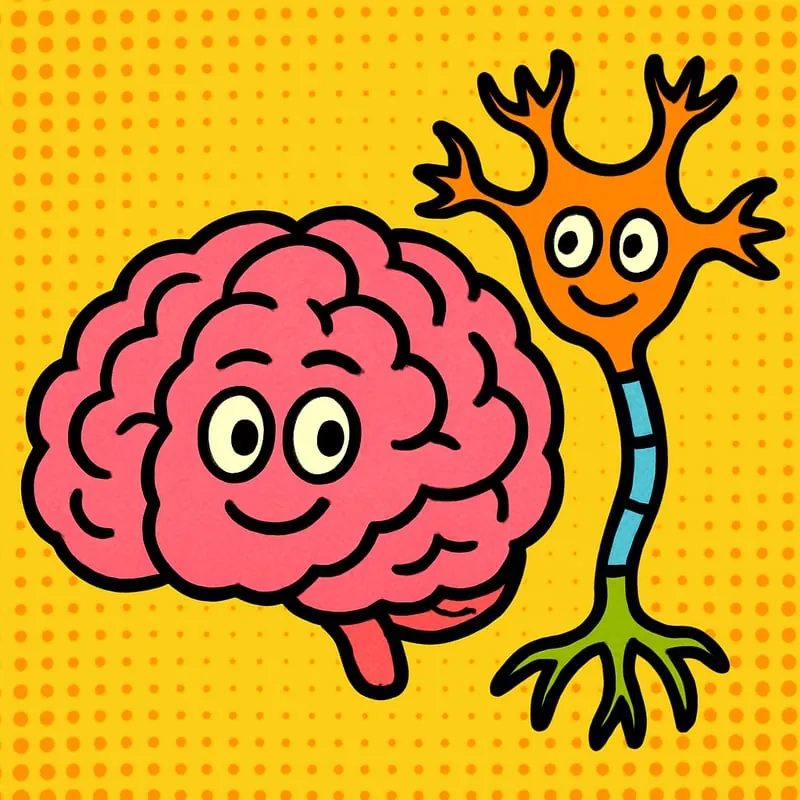
Most of your body’s cells get replaced regularly. Your skin sheds and rebuilds every month. Your stomach lining renews every few days. Even your bones are constantly turning over. But neurons - the cells that do your thinking - are different. Most of them stay with you your entire life.
For decades, scientists believed adults couldn’t grow new neurons at all. Recent research has softened that picture. Some brain regions - most famously the hippocampus, where new memories form - do produce new neurons throughout adult life, in a process called neurogenesis. But the rate is small compared to other tissues, and most of the brain’s neurons really are lifelong companions.
This is part of why traumatic brain injuries are so much harder to recover from than skin wounds. The brain can rewire itself to compensate (this is called plasticity), but it mostly can’t grow lots of replacement cells. It also means the experiences and learning of a lifetime are physically stored in the same neurons across decades. The neuron that holds your memory of a happy moment from age 5 might still be there at age 90, slowly aging alongside you.