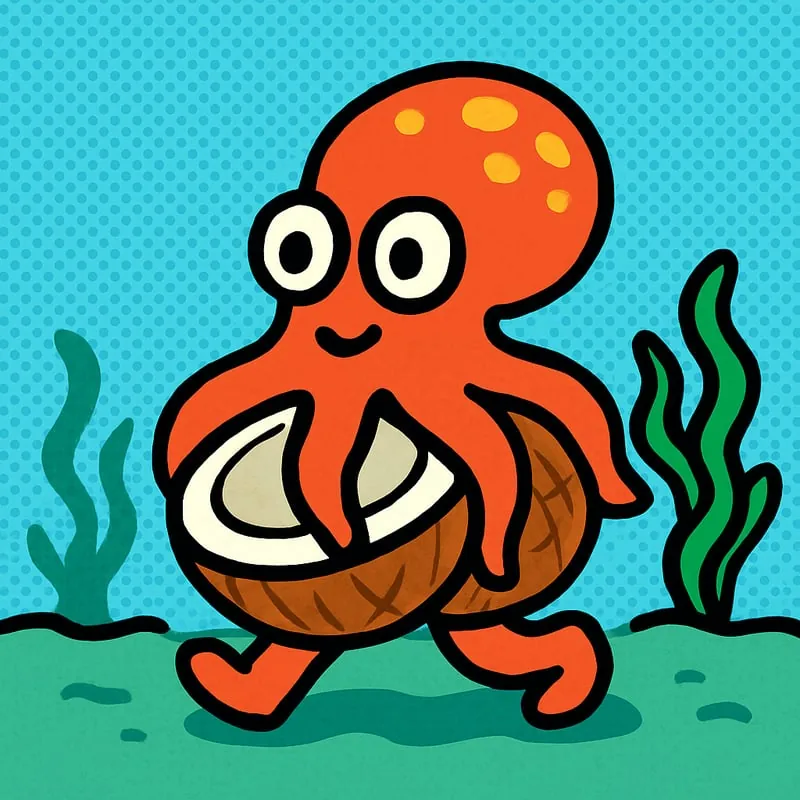
In 2009, scientists diving off the coast of Indonesia filmed something nobody expected. A small octopus called the veined octopus was scooting along the seafloor, but it was not alone. Tucked under its body were two empty coconut-shell halves - leftovers from human snacks that had drifted out to sea. The octopus was clutching them with the suckers along its arms and tiptoeing forward on the very tips, looking a bit like a tiny crab in armor.
When the octopus felt safe, it dropped the shells on the sand, stacked them like bowls, and crawled inside. The two halves closed over it like a clam shell, hiding it almost perfectly. It was carrying its house around with it.
That was the first time tool use was clearly recorded in an invertebrate - an animal without a backbone. Octopuses already had a reputation for being clever, but lugging a coconut around is a different level. The shells slow the octopus down and make it more vulnerable while it walks. The fact that it still does it means the future hideout is worth the present risk - planning ahead, in a creature with no bones.