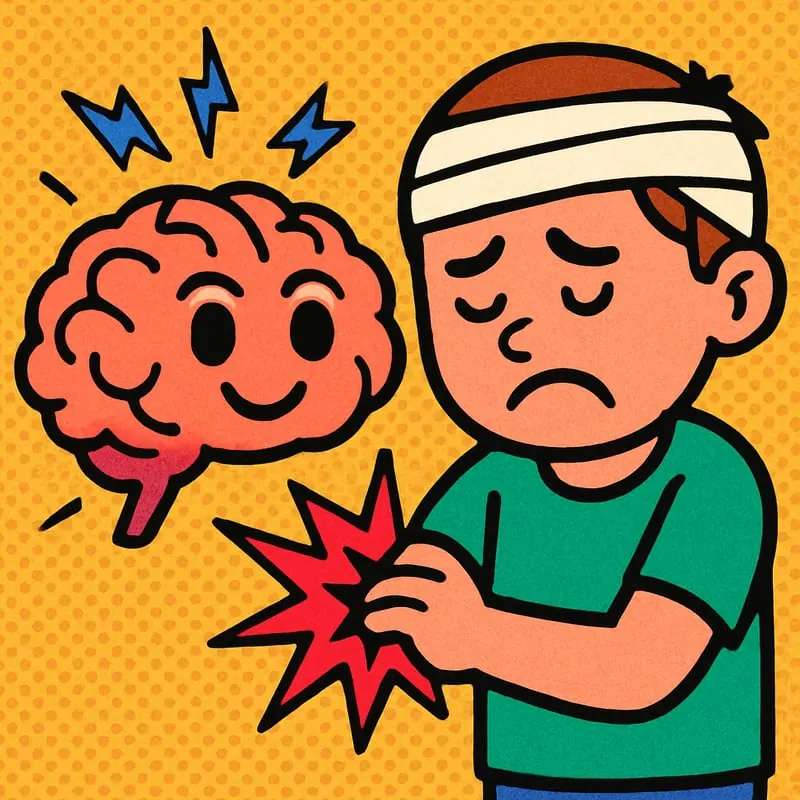
Pain feels like a simple message: something is hurting your body, and you feel it. But the truth is messier. Pain is one of the most complicated things the brain does, and it’s not a simple sense at all - it’s a decision the brain makes based on incoming danger signals.
When you stub your toe, sensors in your skin fire signals about damage. Those signals travel up your spinal cord to your brain. The brain then evaluates: How serious is this? What’s happening around me? Should I be worried? Depending on the answer, it generates an experience of pain that can range from “barely noticeable” to “agonizing.”
This is why pain isn’t always consistent with injury. A soldier shot in battle sometimes feels almost nothing because the brain prioritizes survival over pain. A small paper cut can sting wildly because the brain takes it as a clear signal worth paying attention to. Chronic pain can keep going long after the original injury has healed, because the brain has gotten “stuck” in pain mode. Pain is the brain’s interpretation of your body’s signals - never just the raw signal itself.