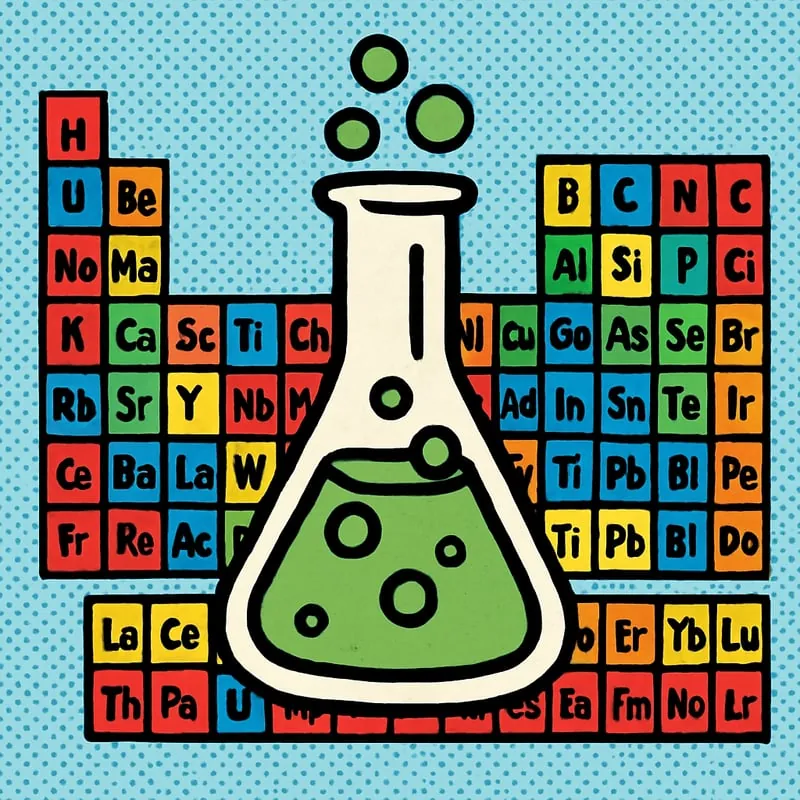
Look around. Trees, rocks, animals, water, you - everything is built from elements. An element is a substance that can’t be broken down into anything simpler by chemistry. There are 118 known elements in total, organized into the famous Periodic Table by Dmitri Mendeleev in 1869.
Of those 118, only 94 occur naturally on Earth. They range from familiar ones like oxygen, iron, gold, and carbon, to rare ones like uranium and francium (so unstable that only a few atoms exist at any given time). The other 24 elements only exist because scientists have created them in laboratories by smashing other atoms together. They typically only stick around for tiny fractions of a second before falling apart.
The newest element, Oganesson (element 118), was first made in 2002 in Russia. It was so hard to create that only a handful of atoms have ever existed, each lasting less than a millisecond. The periodic table itself has been a stunning success of human science: starting with vague notions about what stuff was made of, we’ve now identified, named, and described every fundamental ingredient that makes up everything we can see.