Table salt - the white grains in your shaker - is one of the strangest examples of chemistry making something completely different from its ingredients. Salt is sodium chloride, the chemical compound NaCl, made of two elements that individually are extremely dangerous.
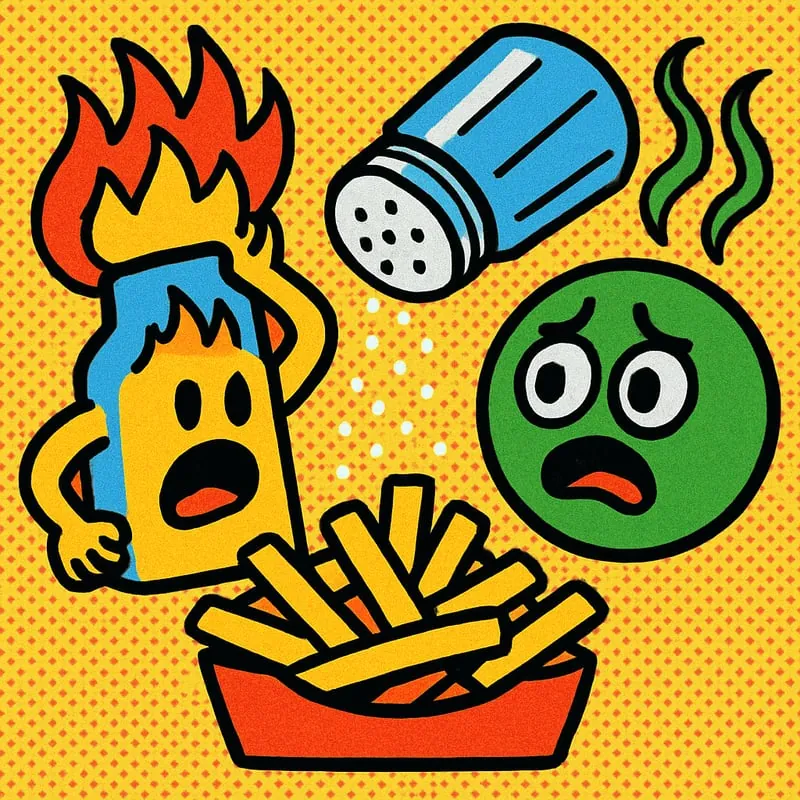
Sodium by itself is a soft silvery metal so reactive that it bursts into flame when it touches water. It has to be stored in oil to keep it safe. Chlorine by itself is a poisonous yellow-green gas - it’s been used as a chemical weapon in wars and can kill people in concentrated amounts. Mixing pure sodium and pure chlorine produces a violent reaction with bright orange flames.
After that reaction, though, what’s left is salt: completely safe to eat, essential for life, and even tasty on french fries. Sodium and chlorine are dangerous because each one wants to grab or give away an electron. When they meet, sodium happily hands its spare electron to chlorine, and the atoms lock together as a stable compound. Once paired, they’re not the same elements anymore in any practical sense. They’re now sodium chloride - gentle, white, granular, and harmless.