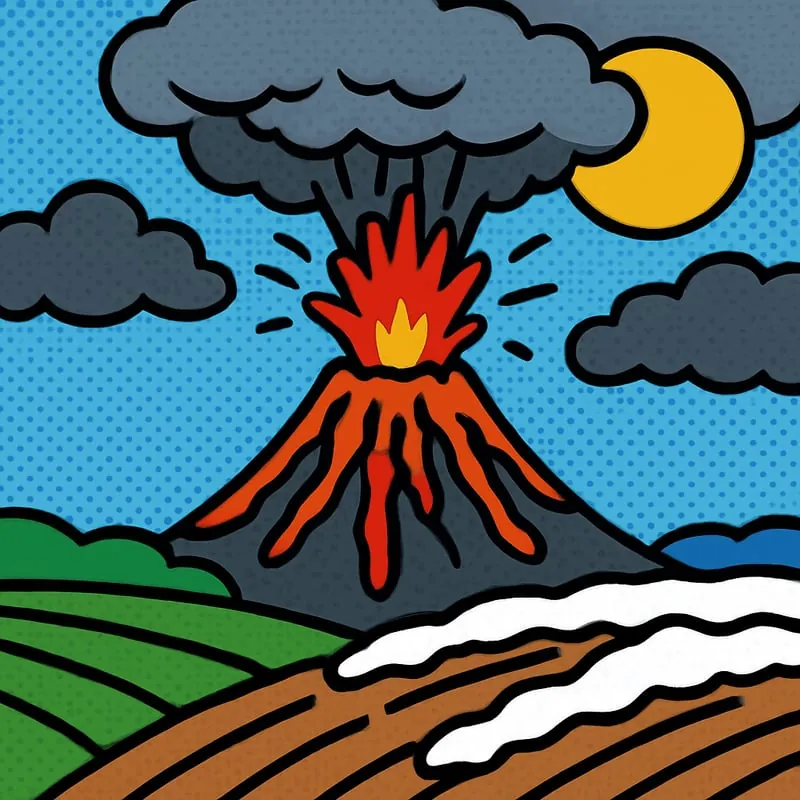
In April 1815, a mountain in Indonesia called Tambora roared to life. The eruption was so huge it removed about 4,000 feet from the top of the mountain and threw an enormous column of ash and gas into the sky. It was the largest eruption in at least 1,000 years, and the deadliest in recorded human history.
The ash didn’t stay over Indonesia. Winds high in the atmosphere spread it around the world. By the next summer, 1816, the dust was still floating up there, blocking part of the sun’s warmth. Crops froze in June. Snow fell in July. People in Europe and North America called it “the year without a summer.”
Some of the strangest results were cultural. The cold, gloomy weather kept a writer named Mary Shelley stuck indoors near a Swiss lake. She told a ghost story to her friends to pass the time, and that story grew into the novel Frankenstein. A volcano on one side of the world helped invent science fiction on the other.