Most animals avoid freezing at all costs. Wood frogs, which live across North America all the way up into the Arctic, lean into it.
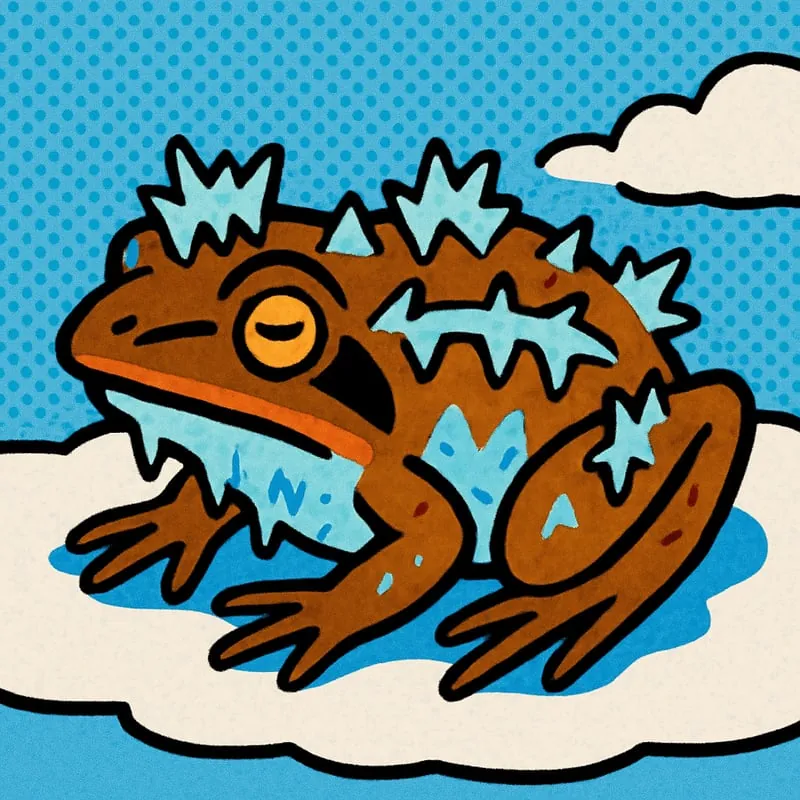
When winter starts, a wood frog tucks under leaves or moss and lets ice form around it. Then ice starts forming inside it: in its bladder, between its muscles, around its heart. Its heart stops beating. Its blood stops flowing. Its eyes turn white. Most of its body becomes solid ice. For all the world it looks dead.
The trick is in its blood. Just before freezing, a wood frog flushes its body with massive amounts of glucose - sugar - which acts like antifreeze inside its cells. The cells themselves never freeze, only the spaces around them. When spring comes and temperatures rise, the ice melts, the heart starts beating again, and within a day or two the frog is hopping off looking for breakfast.