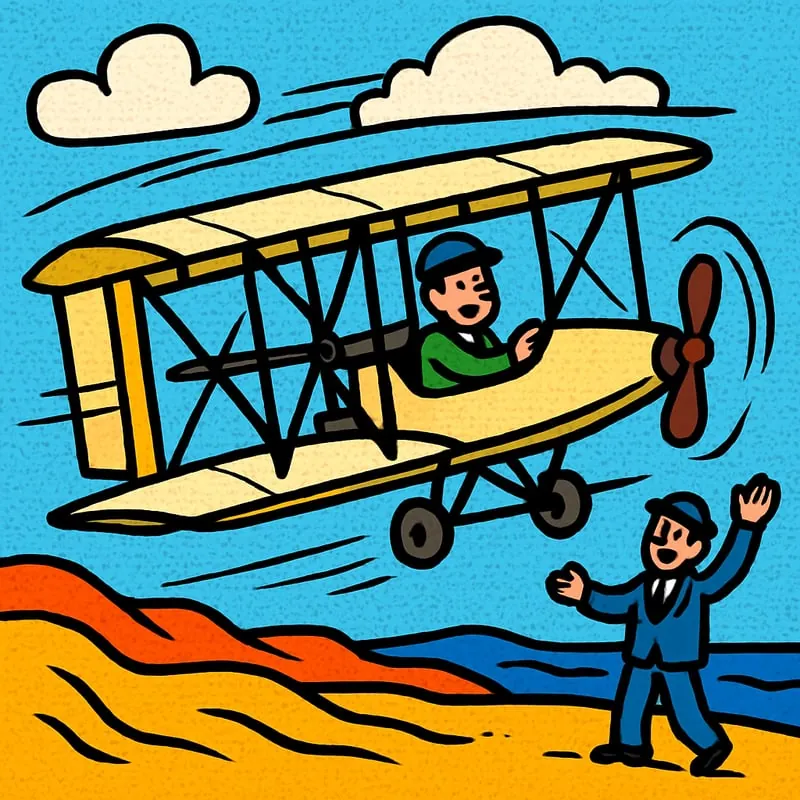
On December 17, 1903, two brothers from Ohio dragged a strange-looking wood and canvas machine onto the sand dunes of Kitty Hawk, North Carolina. Orville and Wilbur Wright had been working on the problem of powered flight for years. That morning, with a stiff wind blowing, Orville climbed aboard and lay flat on the bottom wing.
The Flyer lifted off, wobbled, and stayed in the air for 12 seconds before bumping back down 120 feet away. It was barely longer than the wingspan of a modern jumbo jet. By modern standards it wasn’t much - but it was the first time a heavier-than-air machine had taken off, flown under its own power, and landed safely with a pilot on board.
The brothers made three more flights that same day. The longest covered 852 feet and lasted 59 seconds. Then a gust of wind flipped the Flyer over and smashed it. It never flew again. But the Wrights kept building, and within a few years, airplanes were crossing oceans, carrying mail, and even fighting wars.