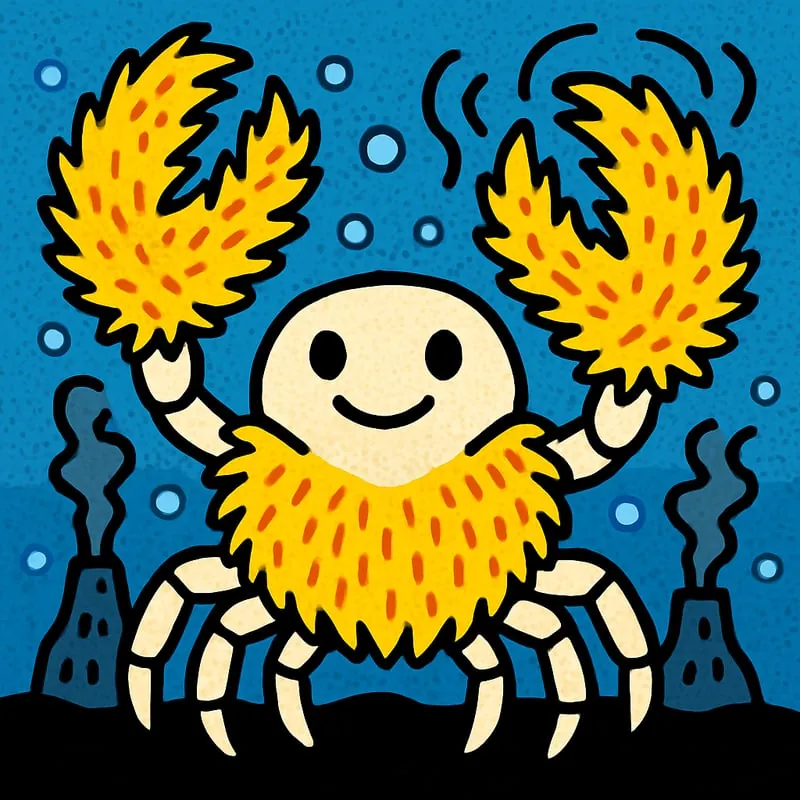
In 2005, a deep-sea expedition off Easter Island found a strange new crab they didn’t expect. It was about the size of a dinner plate, ghost-white, and had unusually long claws covered in dense pale “fur.” It was promptly nicknamed the yeti crab.
The fur isn’t really hair - it’s a thick mat of bristles that traps tiny chemosynthetic bacteria. The crab lives right next to hydrothermal vents, where it slowly waves its furry arms in the vent’s chemical-rich flow. The bacteria stuck in the fur absorb the chemicals and multiply, growing into a thick living crust.
When the yeti crab gets hungry, it eats its own bacteria farm by combing its arms with special mouthparts. Then it goes back to waving its arms in the vent flow to grow another crop. It’s a tiny mobile garden, walking the abyss.