At 9:32 a.m. on July 16, 1969, the ground shook for miles around Cape Kennedy, Florida. A 363-foot-tall Saturn V rocket - taller than a 36-story building and burning fuel at 15 tons a second - roared into the blue sky. Sitting on top in a tiny capsule were three astronauts: Neil Armstrong, Buzz Aldrin, and Michael Collins. Their mission, Apollo 11, was to do something no human had ever done: land on the Moon and walk on its dusty gray surface.
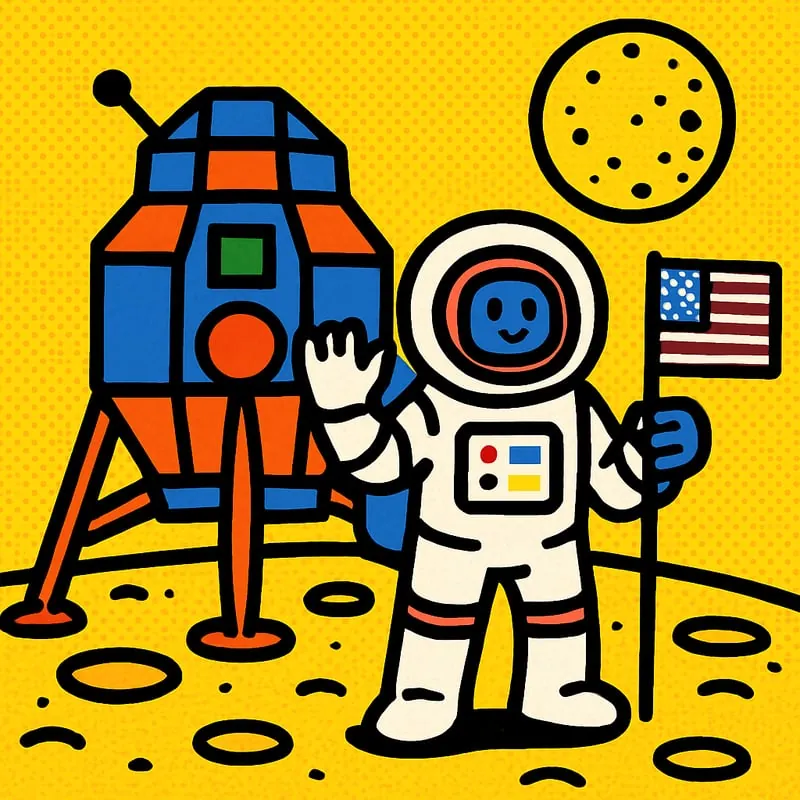
A million people had jammed the beaches and roads of Florida to see the launch. Hundreds of millions more watched live on TV, and the sound of the engines was so loud that reporters miles away said the air itself rattled. The rocket reached space in just 12 minutes and headed toward the Moon at 25,000 miles per hour. Four days later, on July 20, Armstrong steered the lunar module Eagle down through swirling Moon dust, called out 'The Eagle has landed,' and stepped onto the surface with the now-famous words, 'That's one small step for man, one giant leap for mankind.'
Apollo 11 was the result of years of work by 400,000 engineers, scientists, mathematicians, and seamstresses. (Yes, seamstresses - the spacesuits were hand-sewn by Playtex bra-makers.) President John F. Kennedy had promised in 1961 that America would reach the Moon by the end of the decade, and Apollo 11 made it with five months to spare. Six more Apollo missions followed, and twelve Americans in total have walked on the Moon. None of it would have happened without that thunderous launch.