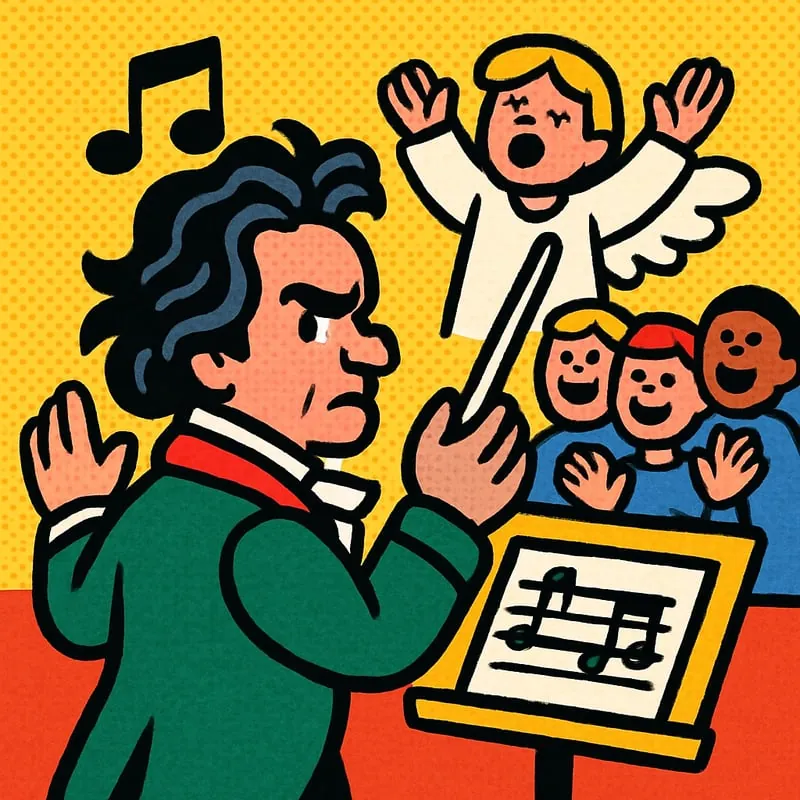
On May 7, 1824, the Kärntnertortheater in Vienna was packed for the premiere of a new symphony by Ludwig van Beethoven. The composer stood at the front of the orchestra, beating time with his arms, his wild hair flying. What the audience didn't fully understand was that Beethoven couldn't hear a single note. He had been almost completely deaf for years. The real conductor, Michael Umlauf, stood behind him and quietly led the musicians.
The symphony was unlike anything anyone had heard before. It went on for over an hour, exploded with drums and trumpets, and then - astonishingly - burst into singing. Beethoven had added a choir and four soloists for the final movement, setting the words of a poem called Ode to Joy to soaring music. Hundreds of singers and musicians had to be squeezed onto the stage. When the last notes died away, the crowd leaped to their feet, waving handkerchiefs and clapping wildly.
Beethoven, still facing the orchestra, kept beating time. He couldn't hear the cheers behind him. One of the singers, Caroline Unger, gently turned him around so he could see the audience's faces. They roared and applauded - five whole standing ovations, more than even the emperor was supposed to receive. Today the Ode to Joy melody is the official anthem of the European Union and has been played everywhere from Olympic ceremonies to the day the Berlin Wall came down. A deaf composer wrote one of the most joyful pieces of music in human history, and the world has been singing it ever since.