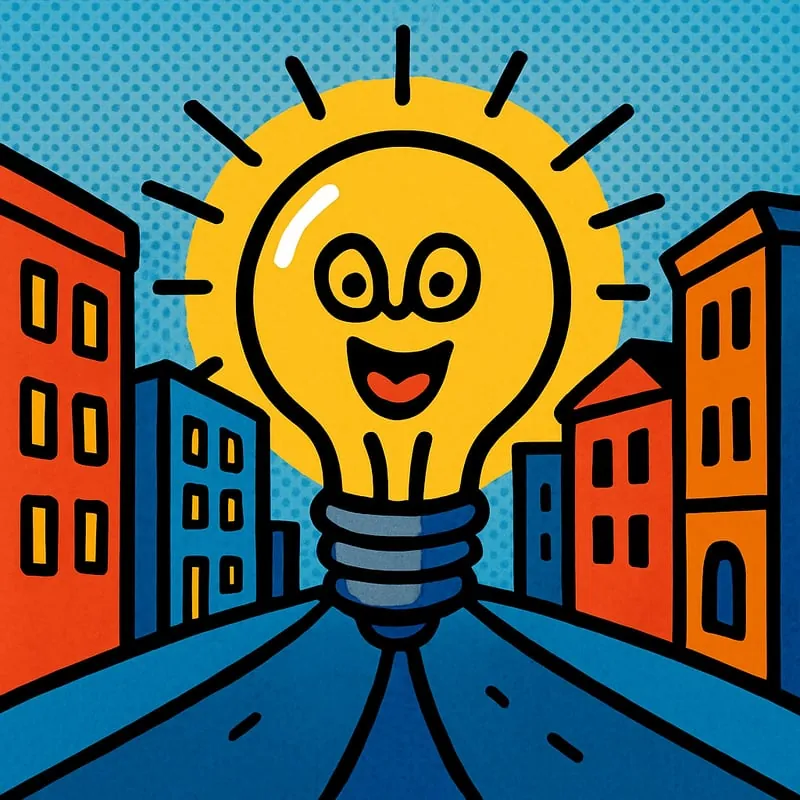
On December 20, 1880, a stretch of Broadway in New York City suddenly glowed with a strange new kind of light. Inventor Charles Brush had installed 23 electric arc lamps along the street between Union Square and Madison Square. As the sun went down, an engineer flipped the switch and the lamps blazed to life with a buzzing, blue-white brilliance that made the whole avenue look like daytime had refused to leave. Crowds stopped in their tracks. Horses spooked. Newspapers called it "a sight to dazzle the eyes."
Before that night, New York streets had been lit by flickering gas lamps, which cast soft yellow puddles of light but left most of the city dim, smoky, and dangerous after dark. Charles Brush's arc lamps were a hundred times brighter. They worked by passing electricity between two carbon rods, creating a tiny lightning bolt that burned with intense brilliance. The lamps were so dazzling that engineers had to put them on tall posts so they wouldn't blind pedestrians. Broadway quickly earned a new nickname - "The Great White Way."
The electric lights helped turn Broadway into the theater capital of America, because audiences could now stroll safely between shows late into the night. Within a decade, Thomas Edison's softer incandescent bulbs replaced the buzzing arc lamps in homes and offices. But Broadway kept its glow, eventually exploding into the neon and LED light displays of Times Square that today are visible from space. It all started with a few carbon rods, one ambitious inventor, and a December evening when a New York City street first traded in its gas flames for the electric age.