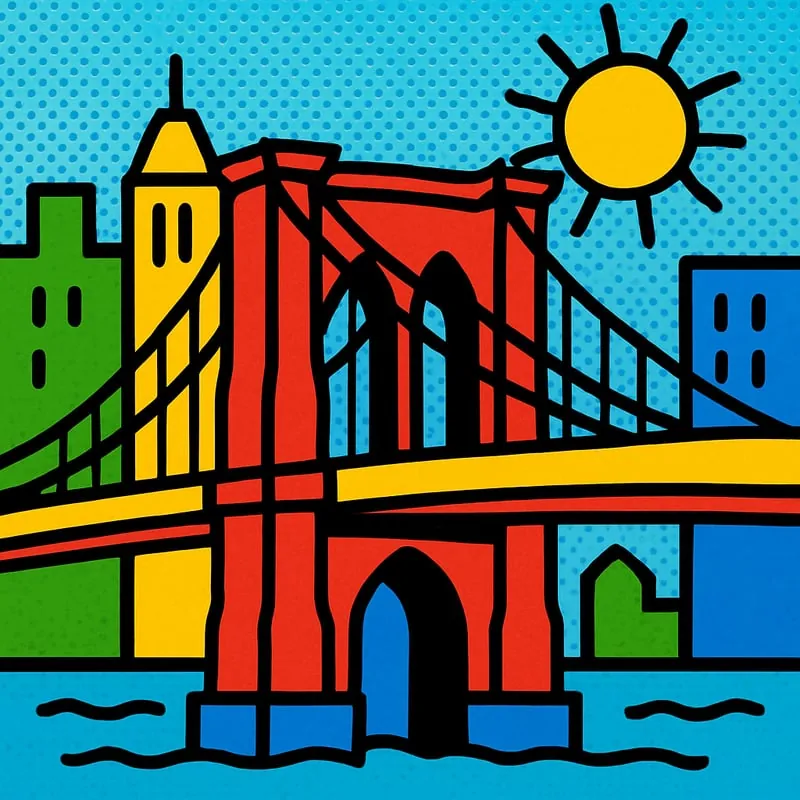
On May 24, 1883, fireworks burst over the East River in New York City as the Brooklyn Bridge officially opened. About 150,000 people walked across it that first day. They paid a penny each. President Chester A. Arthur led a parade of dignitaries, and ships in the harbor blew their whistles. The bridge stretched 1,595 feet between its two huge granite towers, making it the longest suspension bridge in the world. It had taken 14 years to build.
The bridge's story is full of heartbreak. The chief engineer, John Roebling, was hit by a docked ferry while surveying the site in 1869 and died of his injuries soon after. His son, Washington Roebling, took over. But Washington got sick with a painful condition called the bends from working in the underwater chambers used to build the bridge's foundations. He was bedridden for years. So his wife, Emily Roebling, became the bridge's secret leader. She studied engineering at home, carried messages between her husband and the workers, and helped solve problem after problem. Without her, the bridge might never have been finished.
For weeks after the opening, New Yorkers worried the bridge might collapse. Six days later, a panic in the crowd caused 12 people to be crushed in a stampede. To prove the bridge was safe, the showman P. T. Barnum marched 21 elephants across it in 1884, including the famous Jumbo. Today, the Brooklyn Bridge is still working, still beautiful, and still busy - over 100,000 cars, plus thousands of bikers and walkers, cross it every day. It's also a star: it appears in countless movies and is one of the most photographed bridges on Earth.