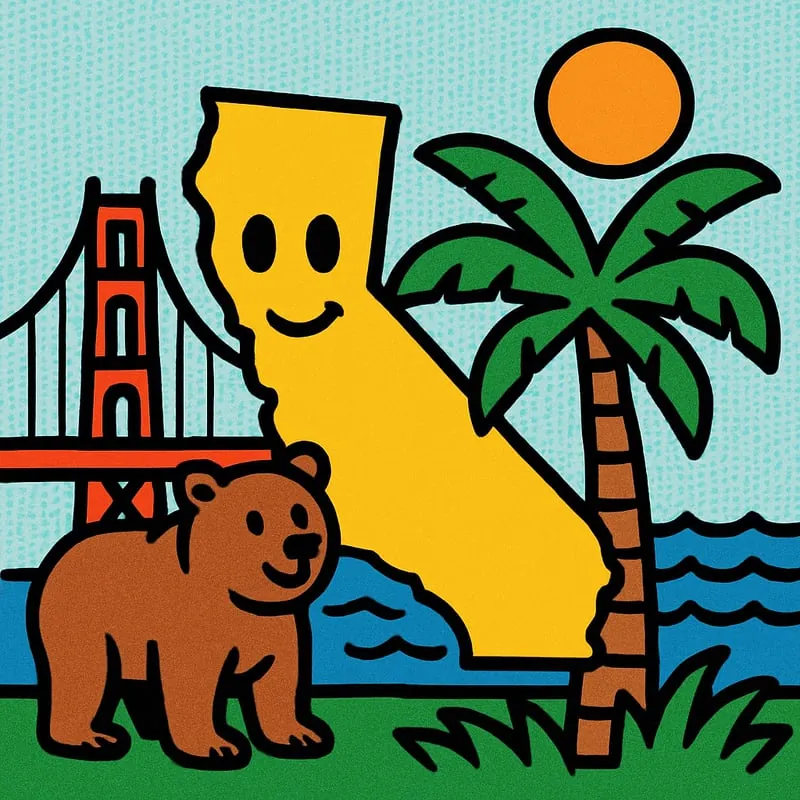
On September 9, 1850, after months of arguing, the U.S. Senate finally voted yes, and California became the 31st state of the United States. People in California didn't even know yet, because the news had to travel by ship and overland on horseback. The official telegraph announcement wouldn't reach San Francisco until weeks later, where it set off cannon fire, parades, and so much cheering that one newspaper said the city seemed to shake.
California's road to statehood was a wild rush, literally. Just two years earlier, in 1848, a carpenter named James Marshall had spotted a shiny flake in the water at Sutter's Mill, and the California Gold Rush exploded. Around 300,000 people from all over the world poured in hoping to strike it rich. The population of San Francisco jumped from about 1,000 to 25,000 in a single year. Towns popped up overnight, ships were abandoned in the harbor as their crews ran for the gold fields, and California suddenly had enough people to skip being a territory and ask for statehood right away.
Today California has nearly 40 million people, more than any other state, and would be one of the largest economies in the world if it were its own country. It grows most of America's fruits and vegetables, makes movies in Hollywood, designs phones in Silicon Valley, and sends rockets into space from its coast. The Gold Rush only lasted a few years, but the energy of that boom, where almost anything seemed possible, still shapes the way California works today.