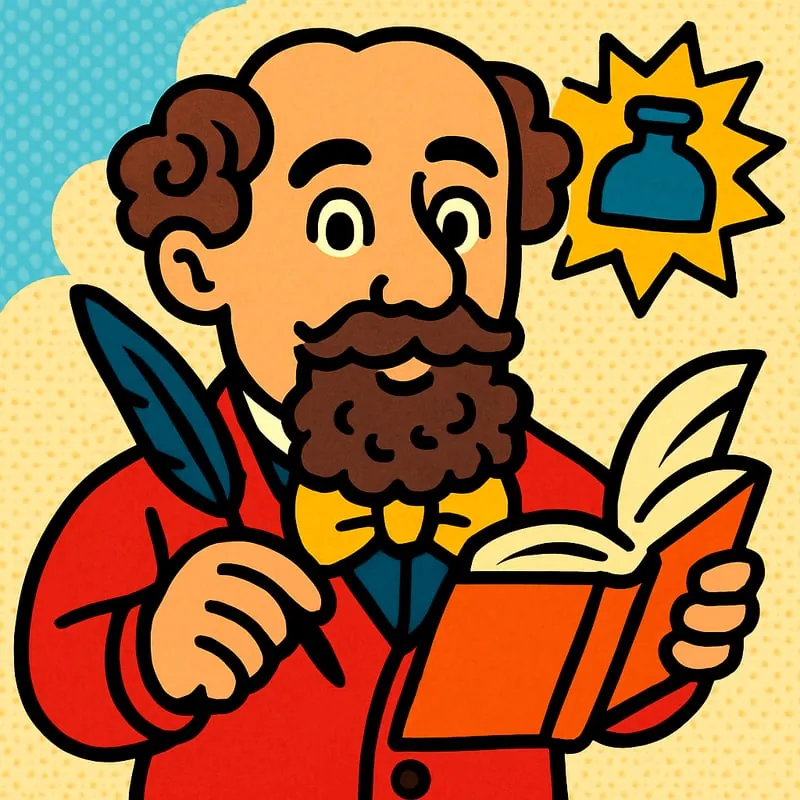
On February 7, 1812, in a little house in Portsmouth, England, Charles John Huffam Dickens was born. His family seemed fine at first, but his dad loved spending money he didn't have. When Charles was 12, his father was thrown into a debtors' prison, and Charles was pulled out of school and sent to work in a damp factory pasting labels on bottles of shoe polish. The boy who would grow up to be one of the most famous storytellers ever spent his days surrounded by rats, sticky paste, and exhaustion.
That misery turned into magic later. Dickens used everything he'd seen, hungry orphans, cruel bosses, foggy London streets, and packed them into novels like 'Oliver Twist,' 'David Copperfield,' and 'A Tale of Two Cities.' His stories were first printed in monthly magazines, one chapter at a time, so readers had to wait weeks to find out what happened next, kind of like a Victorian TV series. Crowds in New York once mobbed a dock waiting for ships from England, shouting up at the sailors to ask if a beloved character had lived or died.
In 1843 he dashed off a short Christmas tale called 'A Christmas Carol,' the story of grumpy Ebenezer Scrooge and the ghosts that visit him. It helped shape the way the whole English-speaking world celebrates Christmas, with feasts, family, and second chances. Dickens proved that a kid from a polish factory could grow up to change literature, holidays, and the way we picture poverty itself.