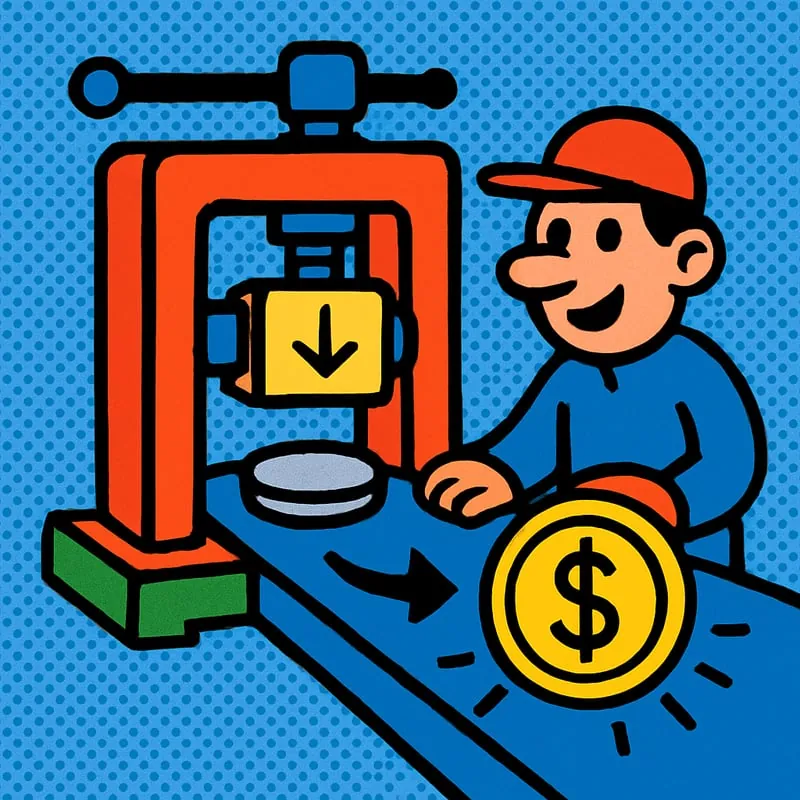
On March 23, 1836, an American inventor named Franklin Beale received a U.S. patent for an improved coin-pressing machine that would soon transform the way money was made. Before machines like Beale's, every American coin had to be struck one at a time by hand, with workers swinging huge hammers down onto metal blanks. It was slow, exhausting, and often resulted in coins that were uneven or stamped crookedly. Beale's invention was a steam-powered press that could stamp coins automatically, evenly, and at speeds nobody had ever seen before.
The Philadelphia Mint, where Beale worked, was the first official U.S. mint, established by George Washington in 1792. In its early days, the mint produced just a few thousand coins a day, often with imperfections. Once steam-powered presses like Beale's were installed, production exploded. Workers could turn out tens of thousands of identical, perfectly stamped coins each day. The crisp images of eagles, presidents, and Lady Liberty became sharper, more uniform, and more recognizable to ordinary people who handled them.
Today's coin presses can stamp hundreds of coins per minute and apply many tons of pressure with computer precision. The U.S. Mint produces around 13 billion coins each year, from pennies to silver dollars. Every quarter that jingles in your pocket, every penny lost between couch cushions, comes from a machine descended from the steam-powered press patented on this day in 1836 - a quiet, clanking invention that turned coin-making from a craft into an industrial superpower, and made the pocket change of an entire nation possible.