On June 11, 1910, in the small French town of Saint-André-de-Cubzac, a sickly little boy was born who could barely swim. His name was Jacques-Yves Cousteau, and doctors told his mother he should never do anything strenuous. Jacques disagreed. By the time he was a teenager, he was diving off cliffs into the Mediterranean Sea - and asking why humans couldn't stay underwater longer.
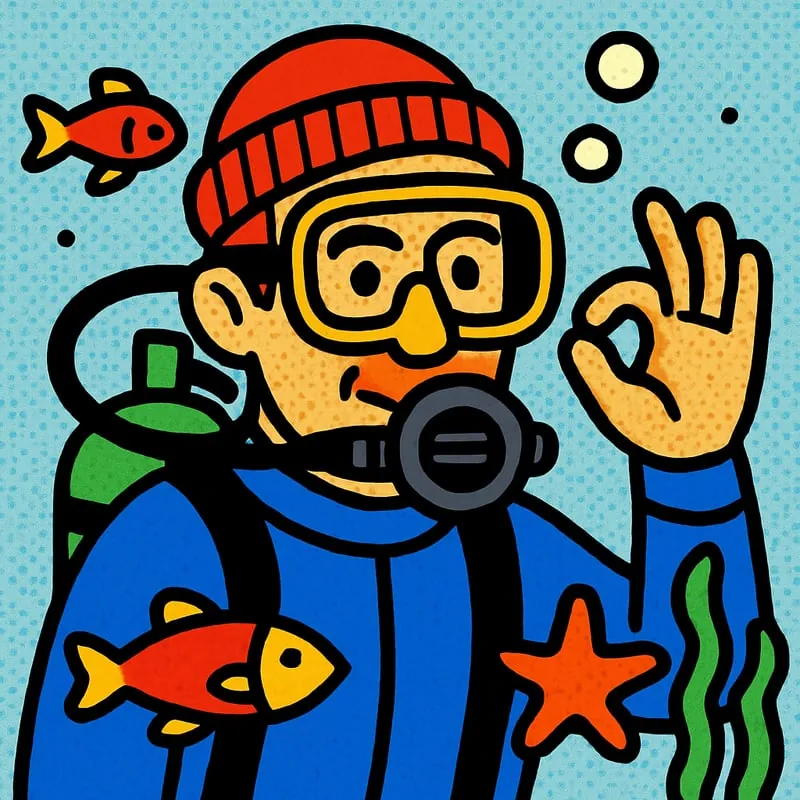
In 1943, he and engineer Émile Gagnan invented the Aqua-Lung, the first easy-to-use scuba gear. Suddenly, divers could breathe and swim freely below the surface for almost an hour at a time. Cousteau didn't stop there. He turned an old British minesweeper into a research ship called Calypso, painted it bright white, and sailed it around the world with a crew of friends, scientists, and his sons. Wearing his bright red wool cap, he filmed sharks, whales, sunken ships, and coral reefs that almost no one had ever seen on screen. His 1956 movie The Silent World won the top prize at the Cannes Film Festival and an Academy Award. His TV series, The Undersea World of Jacques Cousteau, ran for ten years, and his quiet French accent narrated the ocean for millions of kids in the 1970s.
Later in life he became one of the loudest voices saying the oceans were in trouble. He pushed for treaties protecting Antarctica and rallied against dumping nuclear waste at sea. When he died in 1997, the Calypso was tied up at a dock in Monaco. Thanks to Cousteau, almost everyone now knows what a coral reef is - and why it matters.