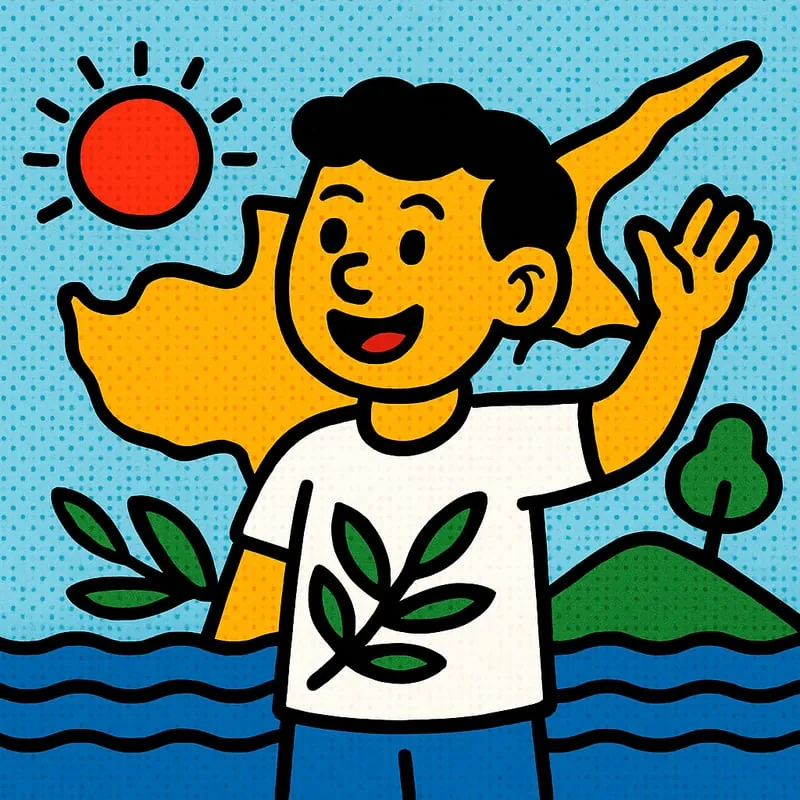
On August 16, 1960, on a sunny morning in the Mediterranean, the British flag was lowered for the last time over Government House in Nicosia. In its place rose a brand-new flag: a copper-orange outline of the island of Cyprus on a white background, with two olive branches underneath. After more than 80 years as a British colony, the island nation of Cyprus was finally independent.
Cyprus is a small island, only about 140 miles long, but it has been bustling for almost 10,000 years. The ancient Greeks said it was the birthplace of Aphrodite, the goddess of love. The Romans, Byzantines, Crusaders, Venetians, Ottomans, and finally the British all took turns ruling it. By the 1950s, Cypriots had had enough and demanded their own country. After tense talks, Britain, Greece, and Turkey agreed on the terms, and Archbishop Makarios III, a tall, bearded religious leader, became the new country's first president.
Life on the island has not always been smooth since then, with conflict between Greek and Turkish Cypriots that still divides the country into two parts. But Cypriots are proud of their independence and celebrate it every October with parades, traditional dances, and feasts of olives, halloumi cheese, and grilled fish. The island today is famous for crystal-clear beaches, ancient ruins, and being a place where east meets west in the middle of the sea, exactly as it has been for thousands of years.