On November 24, 1859, a London bookshop quietly opened a fresh shipment of a 502-page book with a long-winded title: On the Origin of Species by Means of Natural Selection. Within a single day, all 1,250 printed copies had been bought up by readers and other booksellers. The author was a soft-spoken English naturalist named Charles Darwin, and the ideas inside the book would shake science, religion, and how humans saw themselves more than almost any other book ever printed.
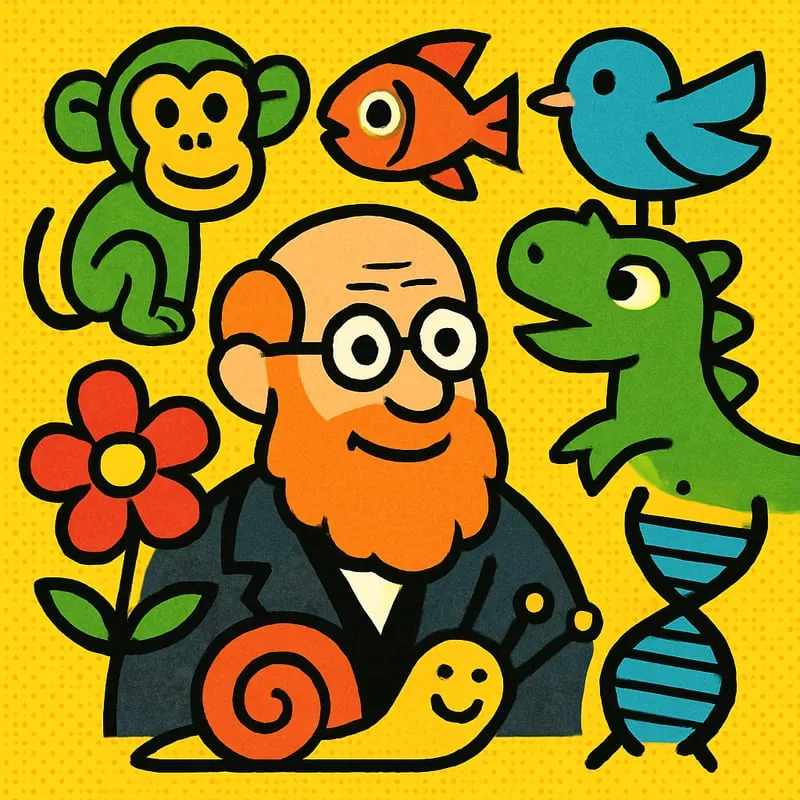
Darwin had spent more than 20 years building up his argument. As a young man in his twenties, he had sailed around the world on a small ship called HMS Beagle, collecting beetles, plants, and fossils. On the Galapagos Islands he noticed finches whose beaks were different shapes on different islands, perfectly suited to the foods on each one. Back home he kept thinking, asking, and writing. His idea was that animals and plants slowly change over many generations because the ones best suited to their world survive and pass on their traits. He called this process natural selection, and it explained how a single ancient ancestor could become millions of different species, including humans.
Darwin worried for years about how people would react, and he was right - the book sparked huge debates between scientists, churches, and ordinary readers. But evidence from fossils, DNA, and modern observations has piled up to support the basic idea ever since. Today evolution sits at the heart of biology and helps doctors fight diseases, farmers grow food, and conservationists protect endangered animals. A polite, often seasick guy who loved earthworms accidentally rewrote the story of life on Earth.