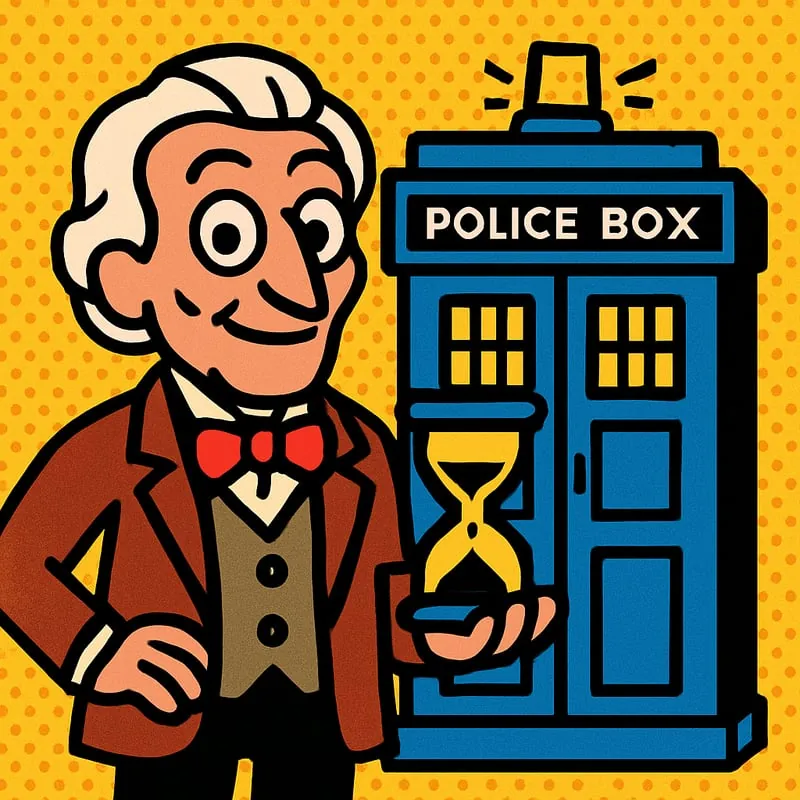
On the evening of November 23, 1963 (just one day after President Kennedy's death dominated the news), a quiet new TV show appeared on BBC One in Britain. Many people missed it because the country was still in shock and many TVs were tuned to news bulletins. The show was called Doctor Who, and the very first episode, titled An Unearthly Child, introduced a grumpy old man with white hair, his clever teenage granddaughter, and a strange blue police box. Inside that police box was a ship called the TARDIS that was somehow much, much bigger on the inside.
The BBC had created Doctor Who as a Saturday teatime show meant to teach kids a little history and a little science. The Doctor traveled through time and space, visiting cave people, ancient Romans, and far-future planets. To save money, sets and costumes had to be cheap and clever, leading to one of the show's most famous villains, the Daleks - robot pepper-pots with sink plungers for arms - invented by writer Terry Nation. Within months, Dalek toys were everywhere and kids were chanting EXTERMINATE on playgrounds.
One of the cleverest tricks the show ever invented was regeneration. In 1966, when the first actor playing the Doctor got too ill to continue, the writers decided the Doctor could simply change his face and body when he was about to die. That trick has kept Doctor Who alive ever since, with more than a dozen different actors taking the role. The show went off the air for a while in the 1990s, but came roaring back in 2005. Over 60 years after that quiet first night, the TARDIS is still landing in new times and places.