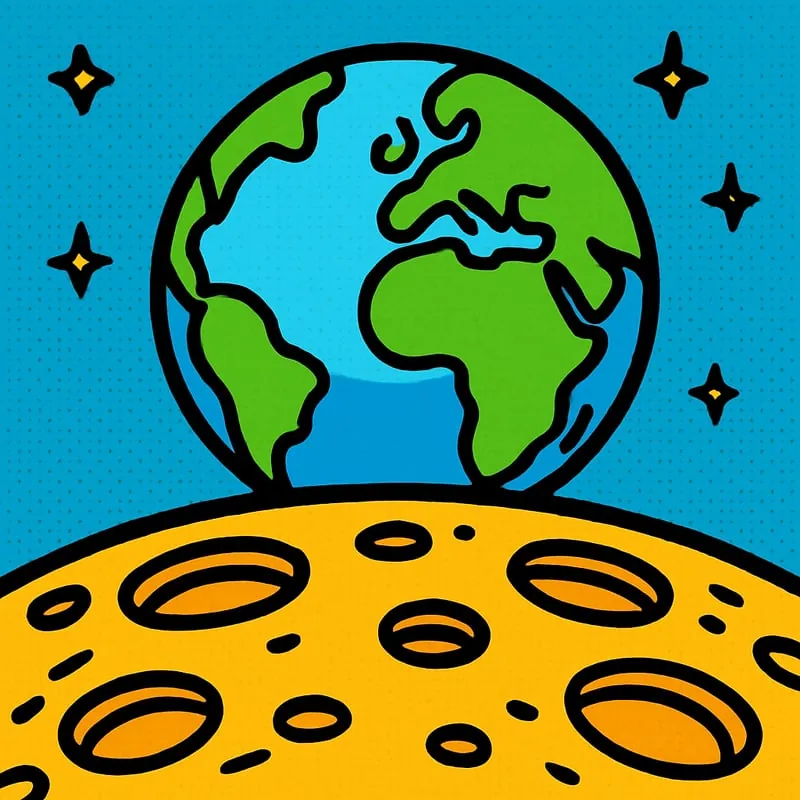
On December 24, 1968, the three astronauts of Apollo 8 were orbiting the Moon for the fourth time when something caught Bill Anders's eye through the small window of their spacecraft. Earth - their home planet - was slowly rising above the gray, cratered horizon of the Moon. "Oh my God, look at that picture over there!" Anders shouted. "There's the Earth coming up. Wow, that's pretty!" Commander Frank Borman scrambled for a camera. Jim Lovell quickly searched for a color film roll. Anders fired the shutter just in time.
What he captured was a small, swirling blue and white marble, half in shadow, hanging in absolute black space above the dead lunar surface. The continent of Africa was just visible through the clouds. From a quarter of a million miles away, Earth suddenly looked tiny, fragile, and impossibly beautiful - no borders, no countries, no walls, just one swirling living planet.
When Apollo 8 came home and the film was developed, the photograph spread around the world like wildfire. Magazines printed it. Schools hung it on walls. It is often credited with helping spark the modern environmental movement, because for the first time, humans could actually see how small and precious their home was. The first Earth Day happened just 16 months later, in April 1970. Nature photographer Galen Rowell called it "the most influential environmental photograph ever taken." One quick snap from a small window on Christmas Eve helped humanity see itself in a brand-new way.