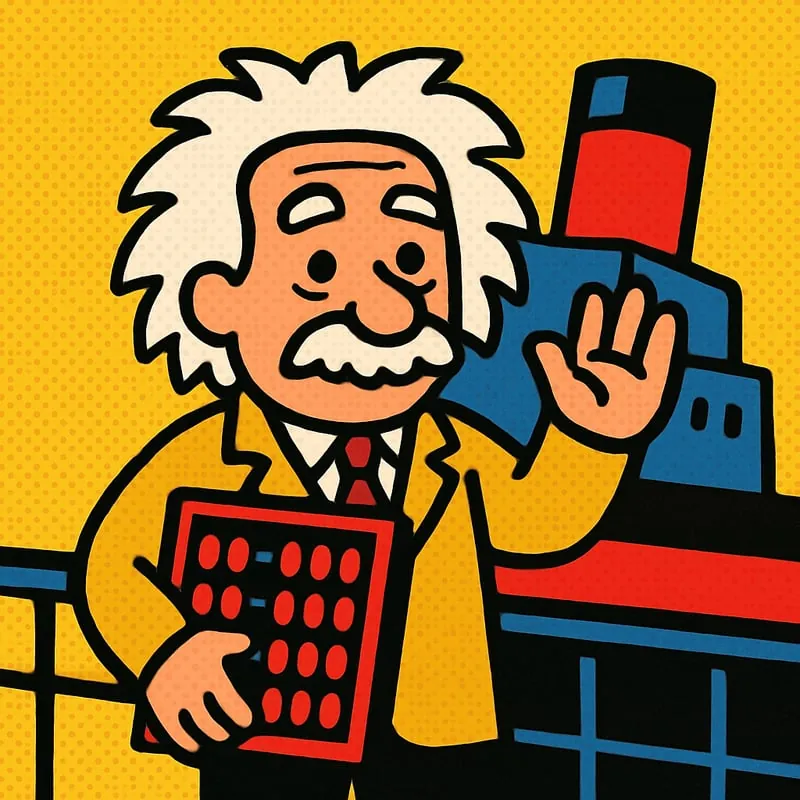
On October 17, 1933, a steamship called the Westernland docked in New York Harbor, and a quiet man with wild gray hair stepped off carrying a violin case and a suitcase. He was Albert Einstein, the most famous scientist in the world. He had just arrived in the United States as a refugee. He would never see Europe again.
Einstein had been visiting California earlier that year when Adolf Hitler and the Nazi party took power in Germany. Because Einstein was Jewish and outspoken against Hitler, his home outside Berlin was raided by Nazi storm troopers. His bank account was emptied. A German magazine put his face on a list of enemies under the headline 'Not Yet Hanged.' Einstein renounced his German citizenship and accepted a job offer from a brand-new research center in Princeton, New Jersey, called the Institute for Advanced Study. On this day he stepped off the ship and into a new life.
In Princeton, Einstein lived in a simple white house on Mercer Street, walking to work every day in a sweater and sandals, his white hair flying. He wrote a famous letter to President Franklin Roosevelt in 1939 warning that atomic bombs might soon be possible - a letter that helped start the Manhattan Project, though Einstein himself never worked on the bomb and later said signing it was his 'one great mistake.' He spent the next 22 years writing, teaching, and welcoming visitors. The world's best-known scientist became an American citizen in 1940 and lived in Princeton until his death in 1955.