On September 22, 1791, a baby named Michael Faraday was born in a poor London neighborhood to a blacksmith and his wife. The family had very little money, and young Michael only went to school until he was 13. To help out, he started working as an errand boy at a bookbinder's shop, then as an apprentice. While stitching the bindings of science books, he started reading them. By his teens, he had taught himself chemistry and physics by candlelight.
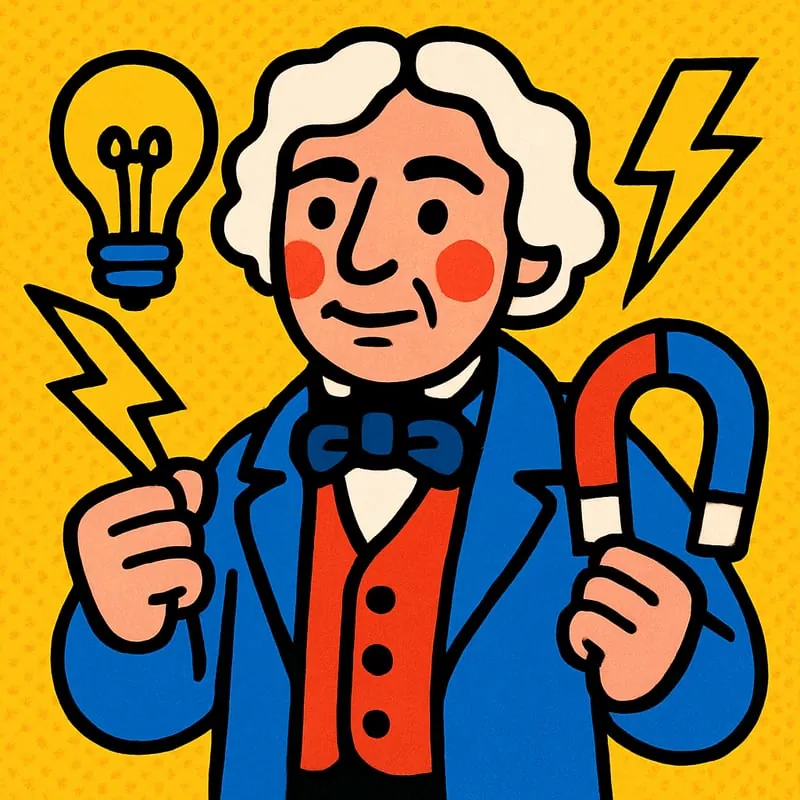
Faraday's huge break came when a customer gave him tickets to lectures by the famous chemist Humphry Davy. Faraday took 386 pages of notes, bound them into a book, and sent them to Davy as a thank-you. Davy was so impressed he hired Faraday as a lab assistant at the Royal Institution. Once inside the lab, Faraday went on a tear of discoveries that still shape your daily life. He figured out that moving a magnet near a coil of wire creates electricity, a discovery now called electromagnetic induction. That single idea is how every power plant on Earth, from solar farms to hydroelectric dams, makes the electricity that lights your house. He also invented the first electric motor and the first electric generator, and discovered a metal called benzene used in making medicines.
Faraday turned down a knighthood and refused to use his discoveries to make weapons. Instead he loved teaching, especially kids. Every Christmas he gave the Royal Institution Christmas Lectures, packed with explosions and demonstrations, and they are still given today in his honor. The fact that you can flick a switch and the lights come on, even though Faraday lived 200 years ago, is largely thanks to him.