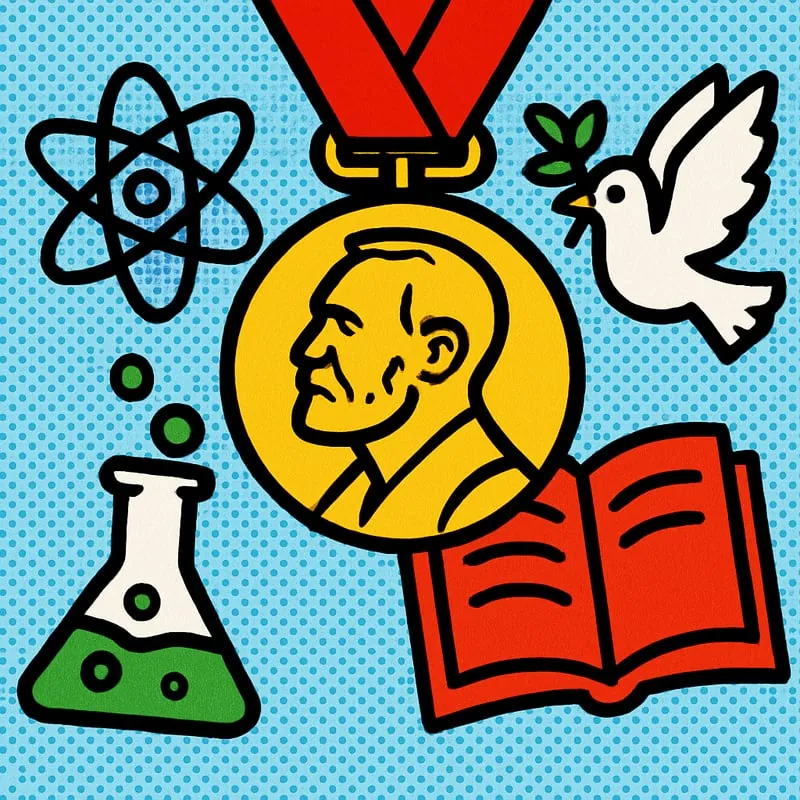
On December 10, 1901, a fancy ceremony took place in Stockholm, Sweden, where five remarkable people received gold medals, hand-written diplomas, and a small fortune in prize money. They were the very first winners of the Nobel Prizes, awards that would soon become the most famous honor on Earth. December 10 was chosen because it was the anniversary of the death of Alfred Nobel, the man who had created the prizes.
Alfred Nobel was a Swedish chemist who had invented dynamite and grown very rich. When his brother died, a newspaper accidentally printed Alfred's obituary by mistake and called him "the merchant of death." Horrified to see how the world would remember him, Alfred secretly wrote a new will, leaving his entire fortune to fund prizes for people who did the most good for humanity. When he died in 1896, his stunned relatives discovered the plan.
The first winners included Wilhelm Rontgen, a German physicist who had discovered X-rays so doctors could finally see inside the human body. Jean Henri Dunant, who founded the Red Cross, shared the first Peace Prize. Since then, the Nobel Prizes have honored more than 950 people, including Albert Einstein for figuring out light, Marie Curie for discovering radium, Martin Luther King Jr. for fighting for civil rights, and Malala Yousafzai who, at age 17, became the youngest winner ever. One dynamite inventor's guilty conscience turned into the greatest prize in the world.