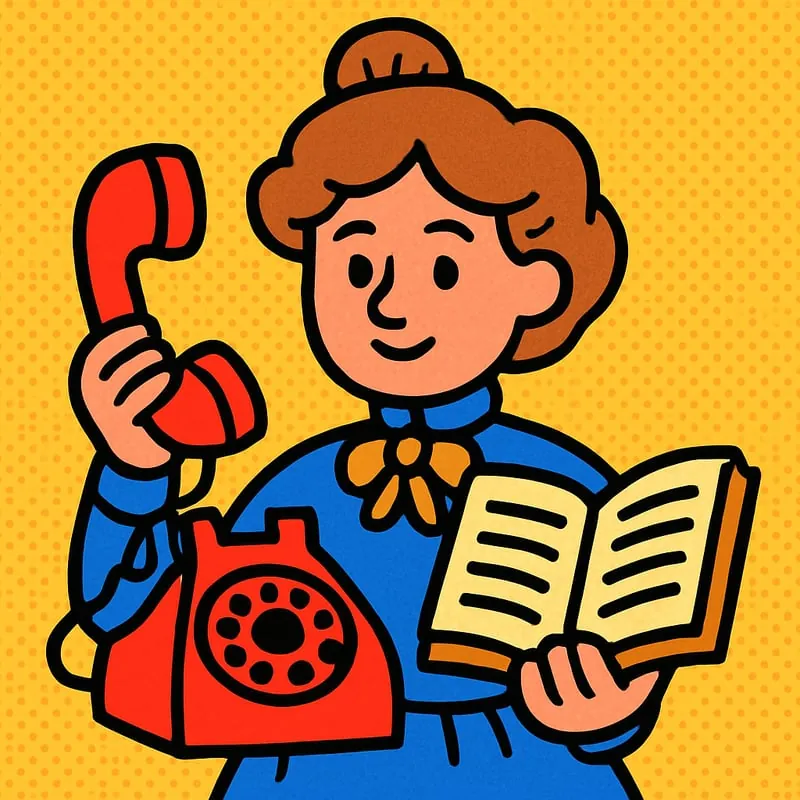
On February 21, 1878, in New Haven, Connecticut, a small printing shop ran off the first telephone directory in the world. It was a single sheet of cardboard, about the size of a placemat, and it listed just 50 names. There were no phone numbers on it. Telephones were so brand-new that you just picked up the receiver, told an operator who you wanted to talk to, and she plugged in your wires by hand at a switchboard.
The New Haven phone exchange had only been open for a few weeks. Most of the listings weren't even regular people, they were businesses, doctors, the police station, and the post office. The whole point was to help operators find the right line quickly. Soon, as phones spread, every town needed its own directory. Numbers were added. The directories grew thicker. By the early 1900s, big-city phone books were as fat as bricks. The famous Yellow Pages started in 1883 when a printer in Wyoming ran out of white paper and grabbed yellow paper instead. The color stuck.
For more than a century, phone books were dropped on every doorstep in America. Kids stood on them to reach the table. Strong people ripped them in half as a party trick. Then cell phones, the internet, and search engines made paper phone books almost useless, and they slowly disappeared. Still, that little cardboard sheet in 1878 was the start of something massive, the very first time the world tried to keep an organized list of who you could call.