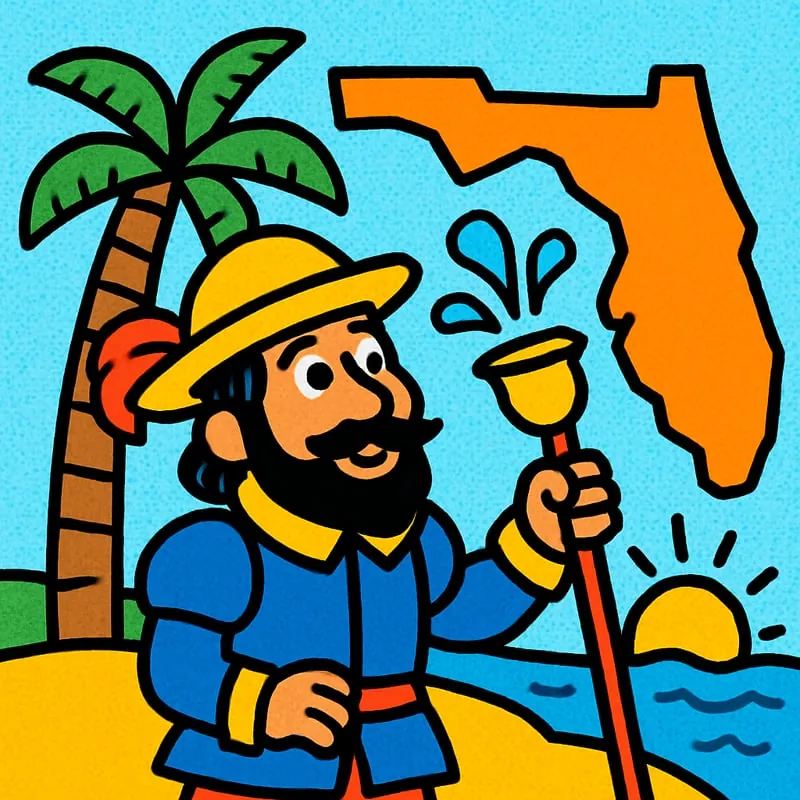
On April 2, 1513, Spanish explorer Juan Ponce de León spotted a green coastline shimmering on the horizon and steered his three ships toward it. He had been sailing north from Puerto Rico when this lush, flowery land appeared. Because it was the Easter season - called Pascua Florida, or 'Feast of Flowers,' in Spanish - and because the shore was bursting with blossoms, he named the place La Florida.
Legend says Ponce de León was hunting for the Fountain of Youth, a magical spring that supposedly made anyone who drank from it young again. He had heard stories from people in the Caribbean about a miracle water somewhere to the north. He never found it, of course, but he did chart hundreds of miles of coastline and met Indigenous peoples like the Calusa and Tequesta who had lived on the land for thousands of years.
Florida went on to become a Spanish colony, then briefly British, then Spanish again, before joining the United States in 1845 as the 27th state. Today over 22 million people call it home, and visitors still go searching for magic - only now it's at theme parks, beaches, and alligator-filled swamps. Ponce de León's hunt for eternal youth flopped, but his accidental discovery put one of America's most famous states on the map.