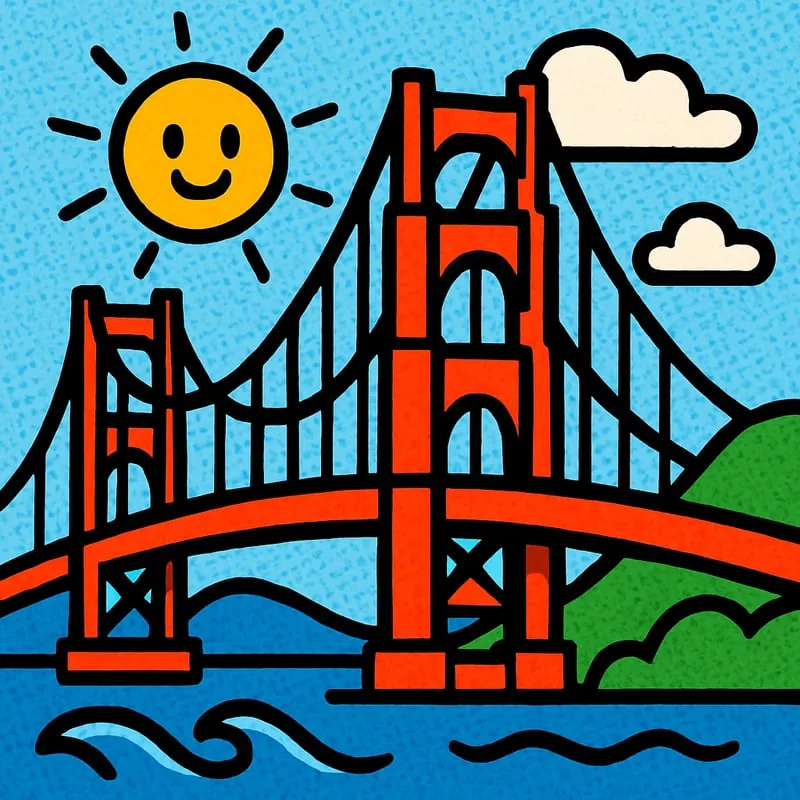
On May 27, 1937, an estimated 200,000 people walked across one of the most beautiful bridges ever built. The Golden Gate Bridge had just opened in San Francisco, connecting the city to Marin County across a mile-wide strait. The whole structure was painted a bold color called International Orange, chosen because it stood out in the famous Bay Area fog. People danced, played harmonicas, and even roller-skated across the new span. The next day, President Franklin D. Roosevelt pressed a telegraph key in the White House and officially opened it to cars.
The bridge had seemed impossible to build. The strait it crossed had brutal currents, deep water, screaming winds, and frequent fog. For years, experts said it couldn't be done. But chief engineer Joseph Strauss and his team - including the designer Irving Morrow, who insisted on the famous Art Deco look and orange color - refused to give up. Construction started in 1933 in the middle of the Great Depression, giving thousands of out-of-work people jobs. Strauss also insisted on a safety net hung beneath the bridge. It saved the lives of 19 workers, who called themselves the Halfway to Hell Club.
At 4,200 feet, the Golden Gate was the longest suspension bridge in the world when it opened, and it kept that record for 27 years. Today it carries over 100,000 cars a day, and its twin orange towers are the symbol of San Francisco itself. Painters work constantly to keep up with the salty air, which would otherwise rust the steel. Visitors from every country in the world stand on its walkways to take photos with the fog rolling in. It's one of the rare bridges that's loved as much for being beautiful as for being useful.