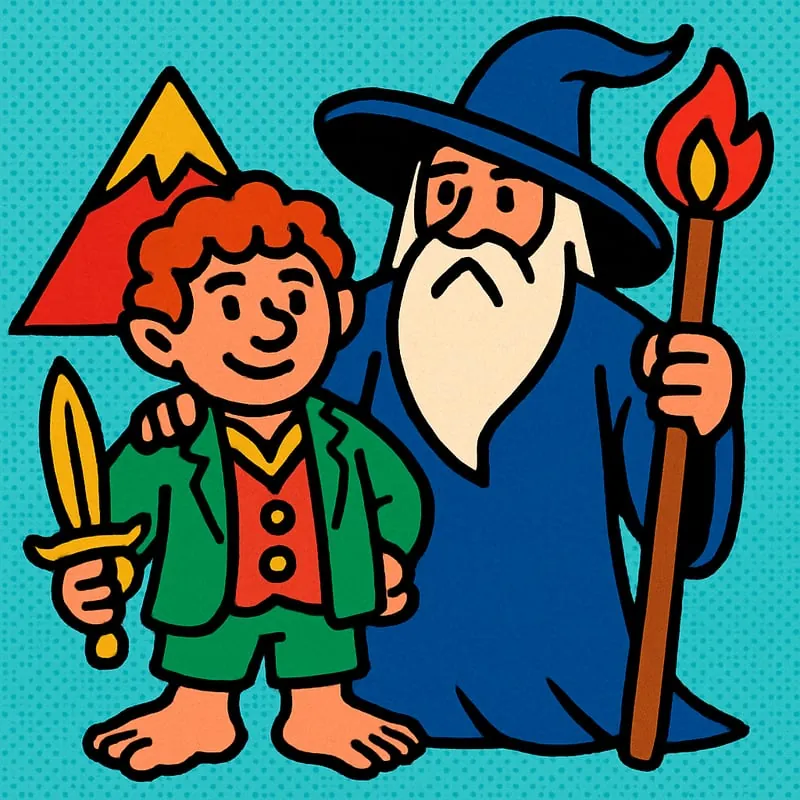
On September 21, 1937, a small, green book with a strange title appeared in British bookshops. It was called The Hobbit, or There and Back Again, and it had been written by an Oxford professor of Old English named J.R.R. Tolkien. The first printing was only 1,500 copies. Tolkien thought maybe a few children might enjoy his story about a furry-footed creature named Bilbo Baggins who goes on an adventure with thirteen dwarves and a wizard.
The book sold out by Christmas. Kids loved Bilbo's cozy hobbit-hole with its round green door, the riddle game in the dark with the creepy Gollum, and the showdown with the dragon Smaug curled around a mountain of gold. Tolkien had started writing the story years earlier, scribbling the famous opening line, In a hole in the ground there lived a hobbit, on the back of a student's exam paper while marking it. He drew the maps and pictures himself. The success of The Hobbit pushed his publishers to ask for a sequel, which turned into the much longer The Lord of the Rings, published in 1954 and 1955.
Together Tolkien's books invented modern fantasy. Almost every elf, dwarf, dragon, and quest story you have read or watched, including Harry Potter, Eragon, the Inheritance Cycle, and even video games like World of Warcraft, owes something to his Middle-earth. The film versions of The Hobbit and The Lord of the Rings won 17 Academy Awards. Not bad for a quiet professor who thought he was just making up a bedtime story for his children.