On March 24, 1874, in Budapest, Hungary, a baby named Erik Weisz was born to a rabbi and his wife. The family soon moved to America, and the boy grew up in Appleton, Wisconsin, where his father struggled to find steady work. Young Erik fell in love with magic after watching a traveling magician's show, and at age nine he was already performing his own act as "Eric, the Prince of the Air," a trapeze artist. As a teenager, he changed his name to Harry Houdini, borrowing the name of a famous French magician.
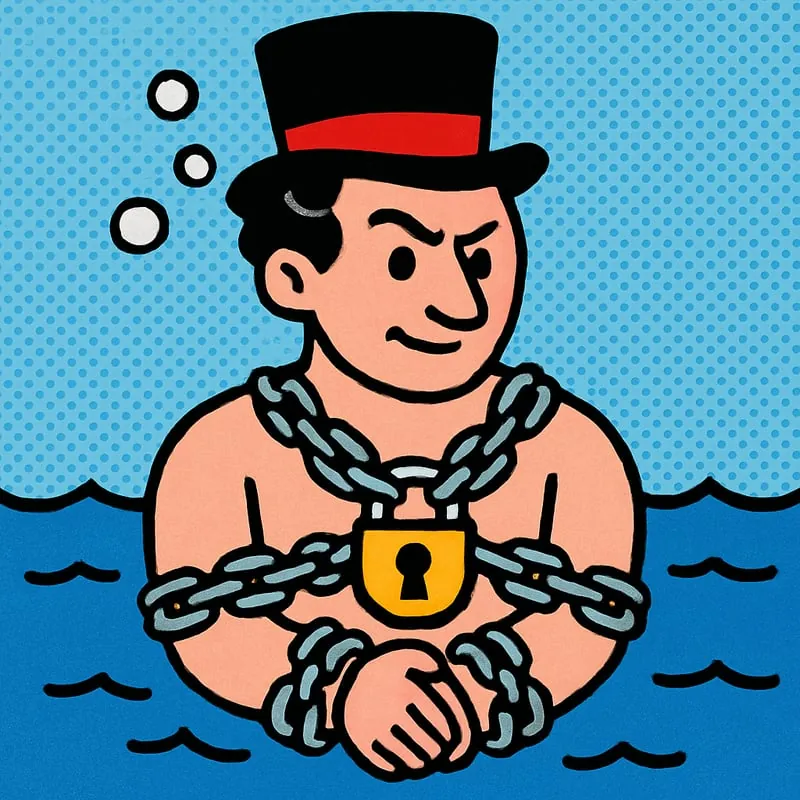
Houdini started out as a card magician but it was escape acts that made him a legend. He had himself locked into handcuffs, leg irons, chains, jail cells, and giant wooden crates that were dunked into rivers. In one famous trick, he'd be tied upside down in the "Chinese Water Torture Cell," a glass tank full of water, and free himself in under three minutes. He could swallow needles and thread and pull them back up already strung together. Audiences gasped, applauded, and tried to figure out his tricks for decades. Most of his secrets, he took to the grave.
Houdini died on Halloween in 1926 from an unexpected illness, leaving behind a tradition: every year on Halloween, magicians around the world try to contact his spirit, just in case. His name has become a regular English word - when somebody pulls off an impossible escape, we still call them a Houdini. The poor immigrant boy from Budapest didn't just become a magician. He became a synonym for breaking free of any chain.