On November 23, 1924, the New York Times printed a small story that quietly changed humanity's idea of the universe. An American astronomer named Edwin Hubble had announced something astonishing: some of the fuzzy patches of light astronomers had been calling nebulae were not gas clouds inside our own Milky Way at all. They were entire other galaxies, each containing billions of stars, floating millions of light-years beyond us.
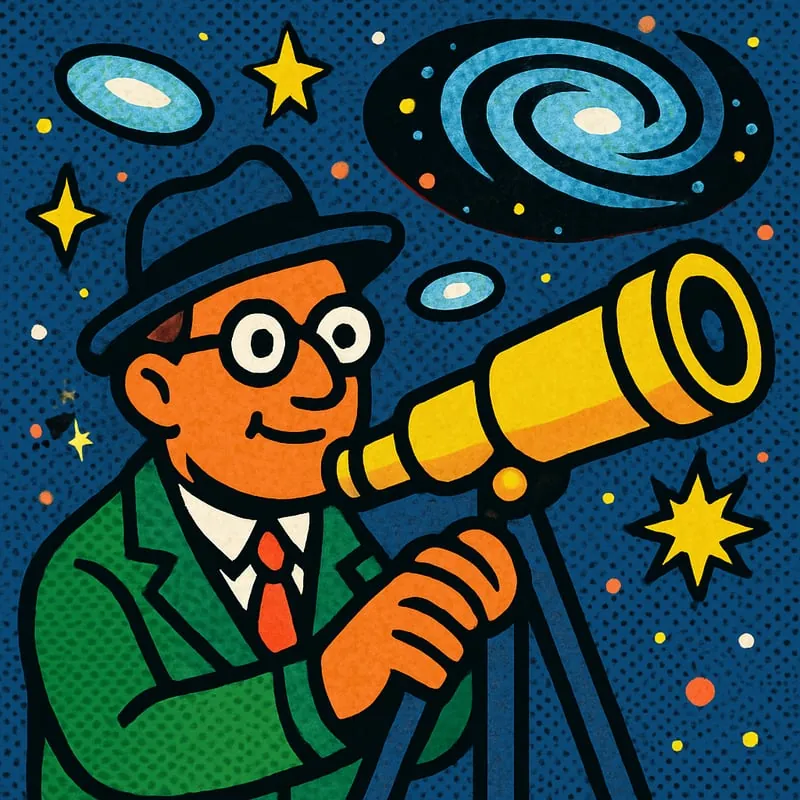
Hubble had made the discovery using the 100-inch Hooker Telescope at Mount Wilson Observatory in California, which was the biggest telescope in the world at the time. He focused on a fuzzy spiral known as the Andromeda Nebula and stayed up late, night after night, taking long photographic exposures. He spotted certain pulsing stars called Cepheid variables inside the spiral. Astronomers already knew a clever trick for measuring distance using these stars, because how bright they look tells you how far away they are. Hubble's careful math showed Andromeda was at least 900,000 light-years away - far beyond the edges of our own galaxy. Today we know it's actually 2.5 million light-years away.
That result shrank our entire Milky Way from being the whole universe to being one of probably more than 100 billion galaxies. Hubble later showed that nearly all those galaxies are flying apart from each other, evidence that the universe itself is expanding. When NASA built a huge space telescope in 1990, they named it the Hubble Space Telescope in his honor, and it has spent decades sending back jaw-dropping images of those very galaxies he first measured. One man, one telescope, and a few flickering stars opened the door to the enormous cosmos we now know.