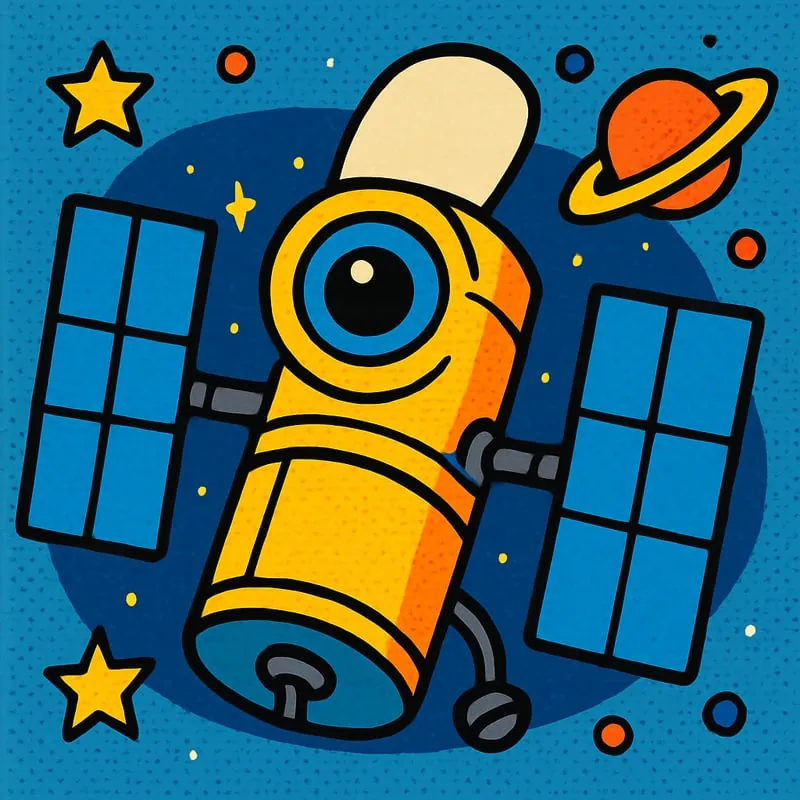
On April 24, 1990, the Space Shuttle Discovery roared off the launch pad in Florida with a one-of-a-kind cargo strapped in its belly: a giant gold-and-silver telescope called Hubble. About the size of a school bus and weighing nearly 11 tons, Hubble was designed to do something simple but revolutionary - look at the universe from above Earth's blurry atmosphere.
The first photos came back wrong. Hubble's huge mirror had been ground very slightly out of shape, and the images were fuzzy. Newspapers called it a disaster. But in 1993, astronauts flew up on Endeavour, captured the telescope, and installed corrective optics - basically a giant pair of glasses for Hubble. The new pictures were stunning. Galaxies blazed with detail. Stars being born inside dust clouds glowed in colours no human eye had ever seen.
Since then, Hubble has taken over 1.5 million observations of stars, planets, galaxies, and the Big Bang itself. It helped prove that the universe is expanding faster and faster, found thousands of new galaxies, and snapped the famous 'Pillars of Creation' photo of newborn stars. More than three decades later, the little space telescope is still circling Earth and sending home wonders.