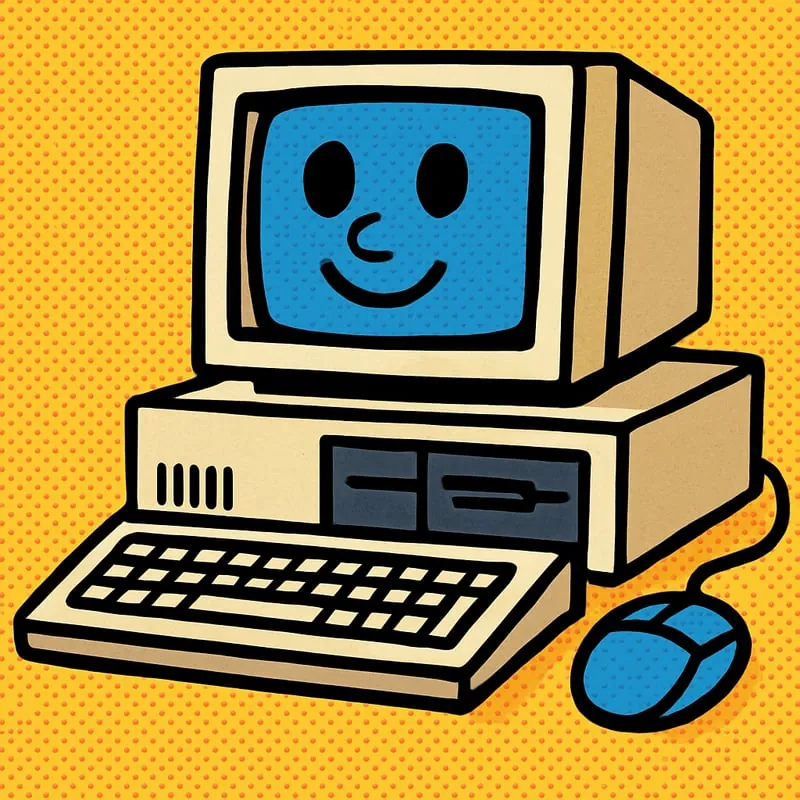
On August 12, 1981, in a New York City press conference, IBM unveiled a beige plastic box about the size of a microwave and announced it was for sale, $1,565 for the basic model. They called it the IBM Personal Computer, model number 5150. It had 16 kilobytes of memory, a floppy disk drive, and no hard drive at all. To a kid today it would look ancient. To the world in 1981, it changed everything.
Before the IBM PC, computers were either giant room-sized machines for big companies or hobby kits for tinkerers. IBM was the most trusted name in business technology, and when they put a computer on regular office desks, everyone took notice. They also did something unusual: they used parts and software from outside companies, including an operating system called MS-DOS from a tiny startup named Microsoft, run by a 25-year-old Bill Gates.
Within a couple of years, other companies started building 'IBM-compatible' clones that ran the same software. Suddenly millions of homes and schools had computers. Kids played Oregon Trail and Where in the World Is Carmen Sandiego on them. Writers ditched typewriters. Microsoft grew into one of the most valuable companies on Earth, almost entirely on the back of that deal. Every Windows PC, every laptop, every chunky desktop at your school today is a direct great-great-grandchild of that beige box IBM rolled out on a summer afternoon in 1981.