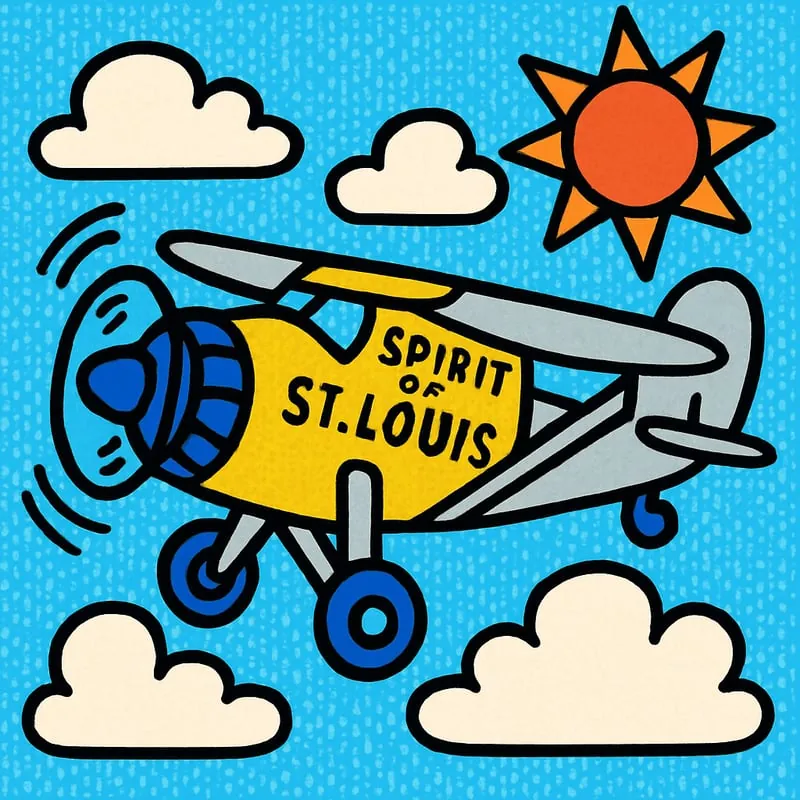
On the evening of May 21, 1927, a hundred thousand people swarmed Le Bourget airfield outside Paris. Searchlights swept the sky. Newspapers and radios had been tracking the daring flight all day. Suddenly, a single small plane appeared out of the dusk, banked over the runway, and bumped to a stop on the grass. The crowd surged through the police barriers and ripped pieces of fabric off the plane as souvenirs. The pilot, exhausted and dazed, was hoisted onto their shoulders. He was Charles Lindbergh, and he had just done the impossible.
The flight had taken 33 hours and 30 minutes. Lindbergh had flown 3,610 miles from New York alone, without sleep, without a radio, and at times with ice forming on his wings. Twice he had nodded off and almost crashed into the sea. He flew so low at one point that he could see the waves below him. To stay awake, he held the windows open in the freezing wind and slapped his own face. When fog rolled in, he climbed above the clouds and navigated by the stars. When he reached the Irish coast, fishermen waved up at him.
The world went wild. Lindbergh became maybe the most famous person on Earth almost overnight. He returned to New York to a parade with four million people and was nicknamed Lucky Lindy. The flight proved that long-distance air travel was possible, and within a few years airlines began carrying passengers across oceans. Today the Spirit of St. Louis hangs in the Smithsonian Air and Space Museum in Washington, D.C., still looking surprisingly small for the size of the adventure it carried Charles Lindbergh through.