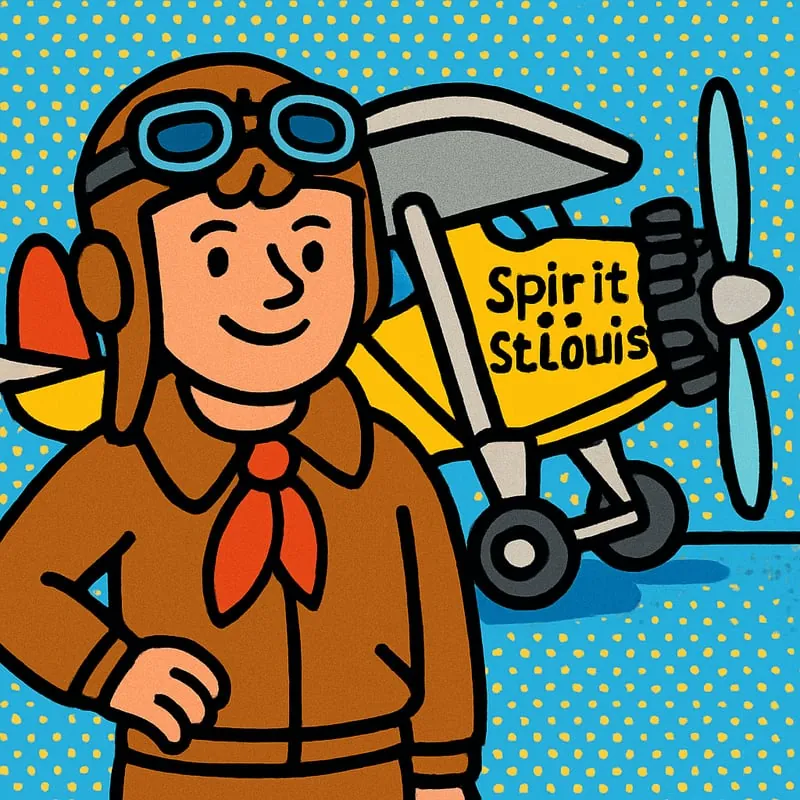
On May 20, 1927, before sunrise on Long Island, New York, a long, thin silver plane sat at the end of a muddy runway at Roosevelt Field. Inside the tiny cockpit, a 25-year-old airmail pilot named Charles Lindbergh strapped himself into a wicker seat. He had a few sandwiches, a bottle of water, a flashlight, and a periscope - because the huge fuel tank in front of him completely blocked his view forward. He was about to attempt something no pilot had survived: fly alone, nonstop, from New York to Paris.
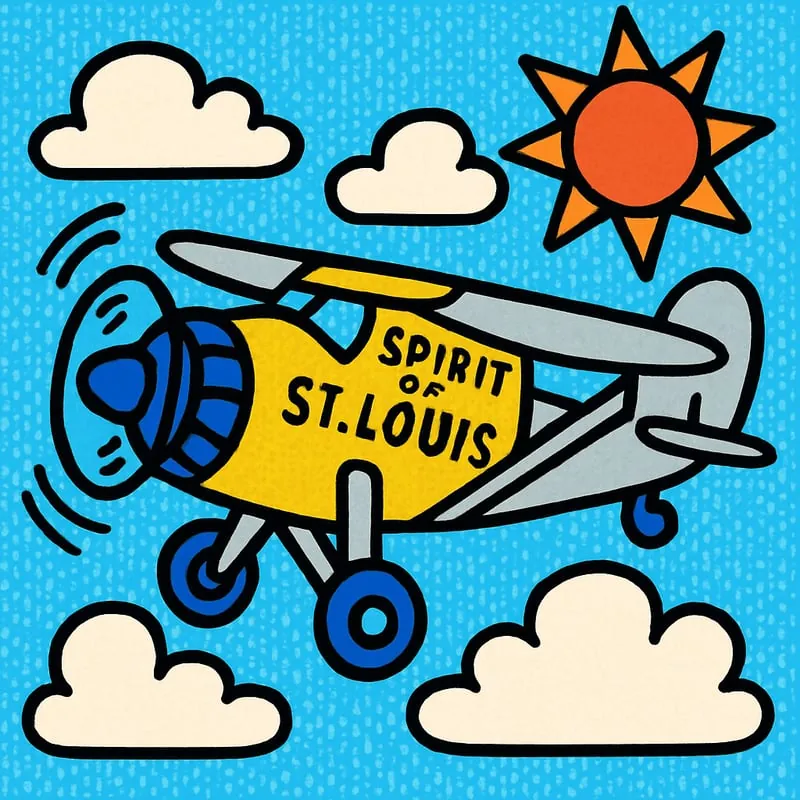
The plane was called the Spirit of St. Louis, named after the city whose businessmen had paid for it. Lindbergh had helped design it himself, stripping out everything he didn't absolutely need - including a parachute and a radio - to save weight for fuel. A prize of $25,000, offered by a hotel owner named Raymond Orteig, awaited the first person to make the flight. Six pilots had already died trying. As Lindbergh prepared to take off, the runway was so soaked from rain that the heavy plane could barely move.
The Spirit of St. Louis bumped and lurched down the muddy strip and just barely cleared the telephone wires at the far end. About 500 people watched, holding their breath, as Lindbergh pointed the plane northeast over the Atlantic Ocean. He would have to stay awake and alone for the next day and a half, fighting fog, ice, and exhaustion. As he climbed into the morning sky, no one in the world had any idea whether they would ever see Charles Lindbergh again. The story of one of history's most famous flights had just begun.