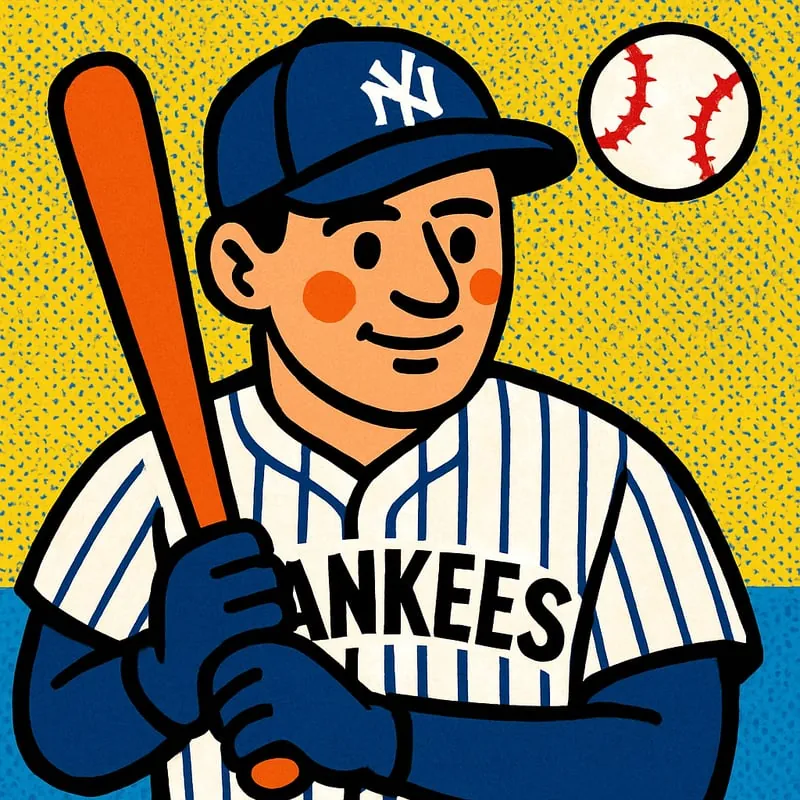
On June 19, 1903, in a small apartment in New York City's Yorkville neighborhood, a baby boy named Heinrich Ludwig Gehrig was born. His parents had moved from Germany and worked long hours; Lou was their only child to survive past babyhood. He grew up big, strong, and shy, sweeping floors after school to help pay the bills. At Columbia University he hit a baseball so far one afternoon that a New York Yankees scout in the stands almost spilled his coffee. The Yankees signed him in 1923.
Lou's nickname was "the Iron Horse," because he just never stopped. From June 1, 1925, all the way to April 30, 1939, he played in 2,130 Yankees games in a row - through broken fingers, sprained ankles, and a fastball to the head. He won six World Series and hit 493 home runs. Sometimes he and Babe Ruth would hit back-to-back home runs in the same game, sending Yankee Stadium into a roar. He was famously polite, paid his mother's medical bills, and signed every autograph kids asked for.
In 1939, something started going wrong with his body. A rare disease was attacking his muscles. He took himself out of the lineup, ending the longest streak in baseball history. On July 4 that year, in front of 62,000 fans at Yankee Stadium, he stood at a microphone and said, "Today, I consider myself the luckiest man on the face of the earth." He died two years later, only 37. The disease is now often called Lou Gehrig's Disease in his honor - and every July 4, baseball fans still remember the man who never wanted to sit out.