On December 27, 1822, a baby named Louis Pasteur was born in the small French town of Dole, the son of a leather tanner. As a young boy, Louis was a slow student and preferred fishing and drawing portraits over studying. But once he caught the science bug at college, nothing could stop him. He became a chemist obsessed with the tiny, invisible world that no one before him had really believed in - the world of germs.
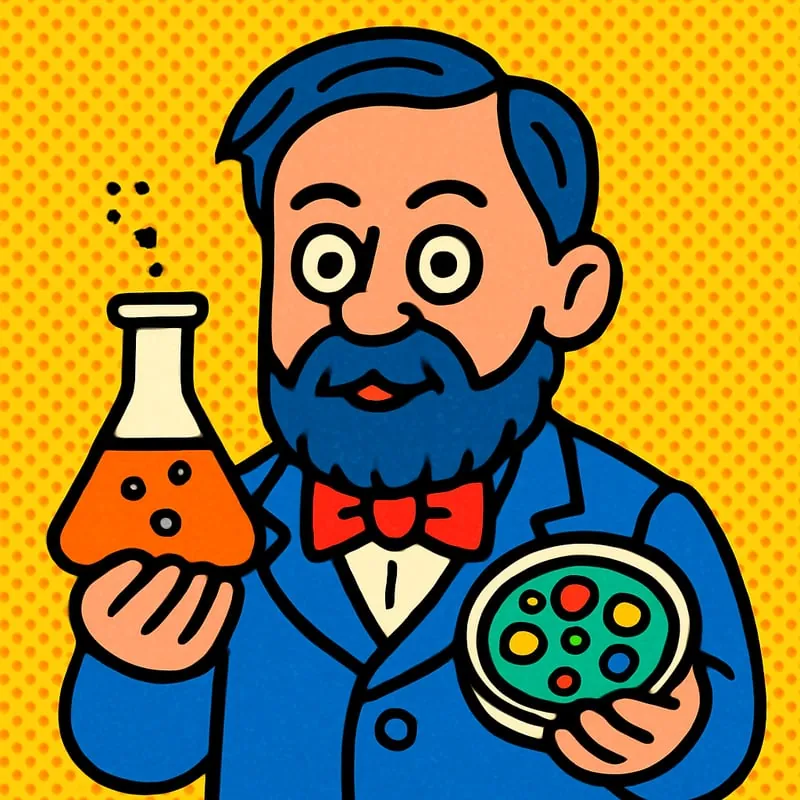
In the 1850s, French winemakers were panicking because their wine kept turning sour. Pasteur peered through his microscope and discovered tiny living organisms - microbes - that were spoiling the drinks. He found that gently heating the wine and milk killed the dangerous microbes without ruining the taste. The process became known as pasteurization, and today it keeps the milk in your fridge safe to drink. Pasteur then proved that germs caused diseases, not bad air as people had believed for centuries. Doctors finally started washing their hands.
In 1885, a 9-year-old boy named Joseph Meister arrived at Pasteur's lab. The boy had been bitten 14 times by a rabid dog. Without help he would die. Pasteur had been working on a vaccine for rabies using weakened virus and decided to try it. He gave Joseph 13 injections over 10 days. The boy lived. The first human vaccine for rabies was a success. Pasteur went on to develop vaccines for anthrax and chicken cholera too. When he died in 1895, he was a national hero. His ideas - germs, vaccines, pasteurization - still keep billions of people healthy today.