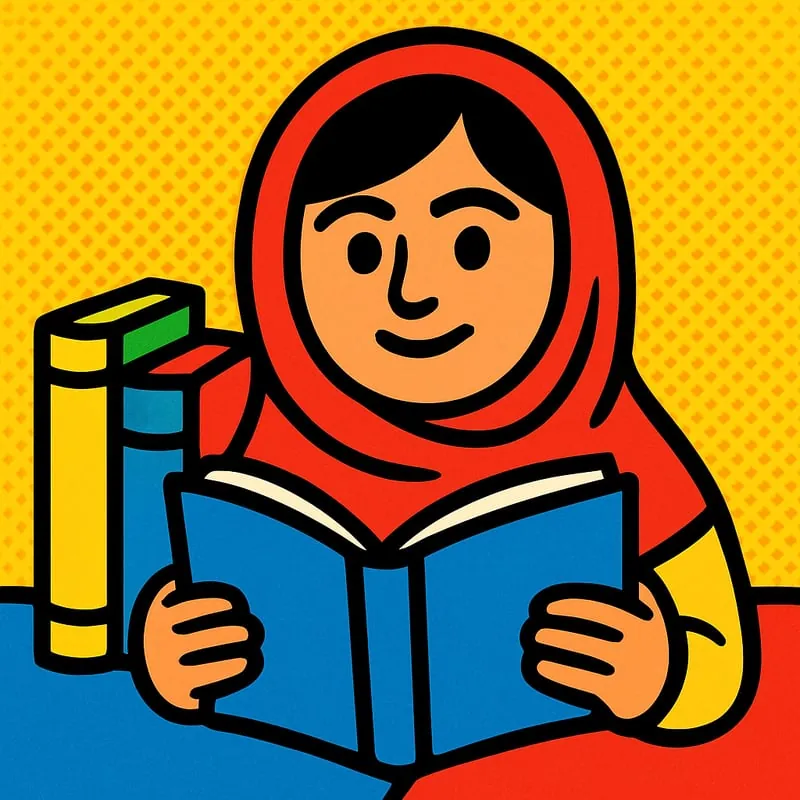
On July 12, 1997, in the green Swat Valley of northern Pakistan, a baby girl was born to a teacher named Ziauddin Yousafzai and his wife Toor Pekai. They named her Malala, after a famous Afghan heroine. Ziauddin ran a school for girls and believed his daughter could grow up to do anything. He gave her a notebook and a microphone before she could even read, telling her, 'Your voice matters.'
Malala loved school more than almost anything. But when she was 11, a group called the Taliban took over her valley and banned girls from going to class. Many families gave up. Malala didn't. Under a pen name, she started writing a blog for the BBC about life under the ban, describing how she still snuck books to class hidden under her shawl. She gave interviews, won a peace prize, and became a worldwide voice for girls' education - all while still a middle-schooler. The Taliban grew angry, and in October 2012, a gunman boarded her school bus and shot her. Doctors in Pakistan and England fought to save her life, and she survived.
In 2014, at just 17, Malala became the youngest person ever to win the Nobel Peace Prize. She's since started the Malala Fund, which helps millions of girls go to school in countries from Brazil to Afghanistan. She graduated from Oxford University, wrote bestselling books, and met with presidents and queens. From a teacher's daughter in a small valley to a global hero - Malala proved that one student's voice can be louder than any threat.